8 JRPGs Where The Protagonist Feels Less Important Than The Rest Of The Team

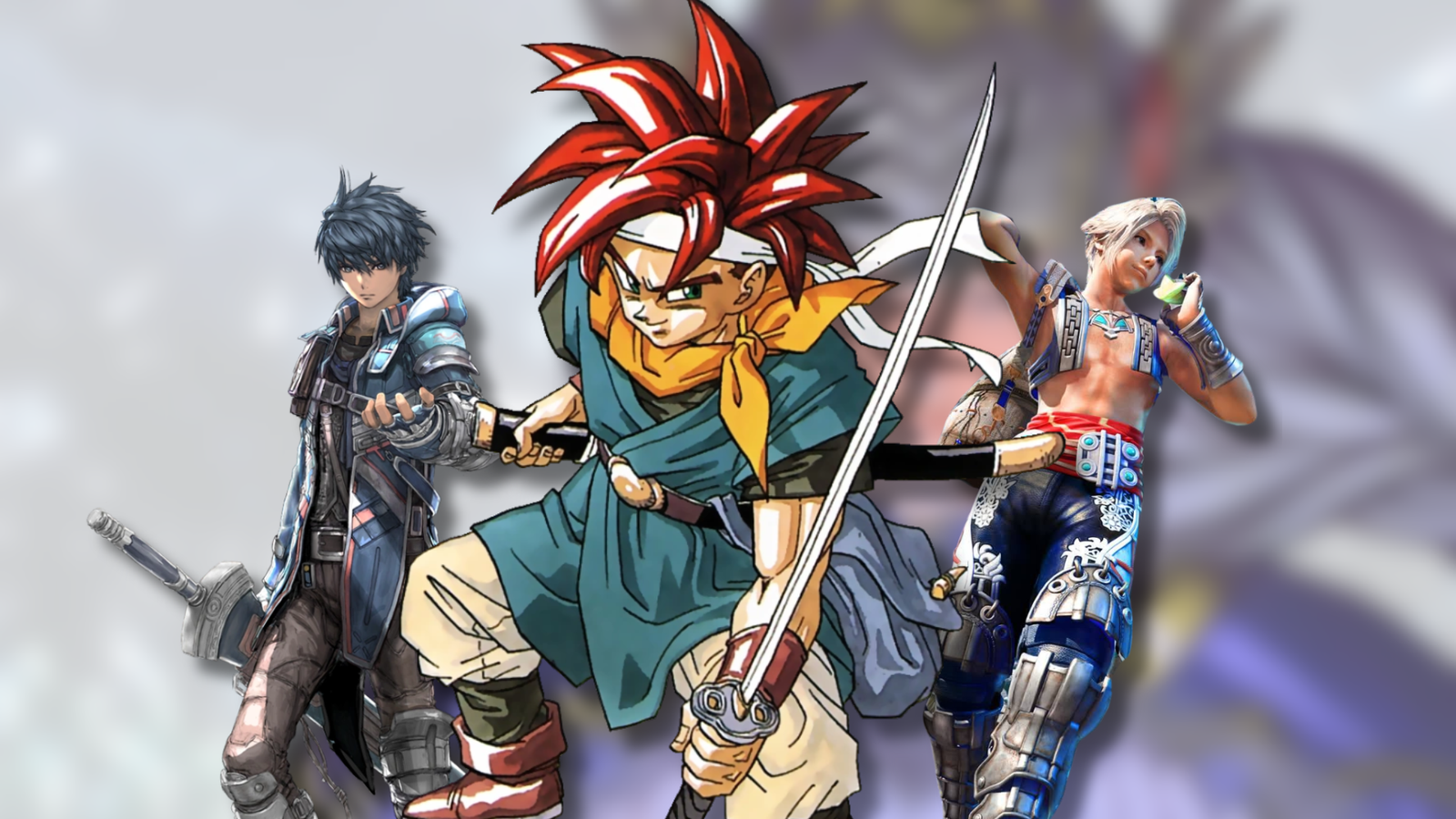
One of the things that distinguish JRPGs from Western RPGs is the focus on narrative. While Western RPGs put more emphasis on external conflicts and character development along the way, JRPGs are about internal conflicts, showing how our characters change during their journey to solve an external problem.
If that sounds confusing, look at it this way: Ash’s goal is to become a Pokémon Master, and in the process, he conquers gyms, defeats Team Rocket, and comforts legendary Pokémon. If Pokémon had a Western narrative, Ash’s main goal would be to defeat Team Rocket and save the world, and in the meantime, he would become a Pokémon Master.
This is a simple distinction, but it reflects the different nature of Western and Eastern storytelling. And it’s one of the reasons why I love JRPGs, as I love to see my characters grow. And because JRPGs are so bright for our team members, the side character sometimes ends up being more important than the main character. This is not to say that the main character is poorly written, just that the others step up and steal the show.
8
Suikoden II
Very Competitive
Suikoden II is often hailed as one of the best JRPGs on the PS1, and I completely agree. The game brings a refreshing political plot in an era where many other titles focus on traditional fantasy creations. In it, you play as Riou, who becomes the leader of the opposition organization as the story progresses. The main catch is that Riou is a silent character, who acts as an insert for the player.
However, with 108 characters to recruit, it doesn’t take long for any number of them to stand out above Riou. Silent protagonists are a little tricky because the plot is always dependent on an outside character to move the needle. It is during these moments that team members like Flik, Viktor, and especially Jowy end up becoming more important to the story.
7
Dragon Quest IV
Lots of Protagonists

Dragon Quest IV introduced a new narrative to the franchise, showing us the perspectives of different characters before they finally come together for a common goal. The opening acts had us playing as Ragnar, then Alena, Torneko, and the sisters, before putting us in the shoes of our Hero/Heroine. In each dedicated chapter, our characters are silent, but from the fifth chapter onwards, the team members get their voices.
To be fair, many Dragon Quest articles can make this list. Although our characters are important to the plot because they are often the chosen ones, they don’t feel more important to the narrative than the rest of the team. It’s always our side characters who give voice to events, interact with the world and express the player’s thoughts out loud.
Dragon Quest IV it stands out because everyone gets a chance in the protagonist’s seat at the beginning, so it feels like they all have equal weight, the only difference is that the Hero/Heroine is guided by Psaro early on, which furthers the journey to defeat him. The DS version has a prequel where we get to play with our titular character, but it doesn’t change much.
6
Chrono Trigger
Hear me

Whenever I write a list about the best JRPGs, it’s hard not to include them Chrono Trigger. The game, designed by a true dream team, is often crowned the best of the genre, and for good reason. However, in the end I still prefer it Chrono Crossand it comes down to a simple comparison: Crono vs Serge.
While Serge is incredibly important to the plot and serves as the real catalyst for events, Crono is just… Crono. He’s brave, which makes all the time travel worthwhile because he chooses to save Marle and ultimately hires a bunch of bad guys at different times to save a future that his seventh generation descendants won’t live to see. But other than that, he’s not exactly a loving team member.
Quiet protagonistism, self-absorption… I’m repeating myself at this point. However, even JRPGs where our main characters don’t speak can still make them important to the plot. Hell, Chrono Trigger and it allows us to finish the game while Crono is dead. I love my silent hero, but I prefer Frog, Lucca, Robo, Ayla, and others.
5
I am Setsuna
We are Setsuna, not Endir

Not coincidentally, I am Setsuna was produced by Tokyo RPG Factory, a subsidiary of Square Enix, with the express purpose of delivering a game that reminds us Chrono Trigger. Martial wise, they managed to pull it off, but that’s where the comparison ends. The story revolves entirely around our main character Endir, a mercenary who accompanies a young woman named Setsuna so that her sacrifice can appease the monsters of the world.
The thing is, the game is not called I am Endir. Okay, that was a little lame, but you get the point. Endir simply accompanies Setsuna on this journey, playing mostly as a spectator. It’s far from the main character like Tidus, who actively learns about Yuna’s pilgrimage and the world of Spira during the journey and decides to take action. Endir is along for the ride, a perfect fit for his stoic personality, but at the end of the day, he doesn’t feel as important as the rest of the team—especially the actor whose name is stamped right on the cover.
4
Xenoblade Chronicles X
Our Mission Is To Test Mira Only

When Monolith Soft started production Xenoblade Chronicles Xthe developer said the goal was to test the Wii U’s technical capabilities alongside the programming wizardry of its staff. To summarize, they succeeded, they created an open world on the console that had to catch fire trying to start the game.
This milestone, however, came at the expense of the JRPG’s narrative. Xenoblade Chronicles X it has a solid main story and complete side quests, but it doesn’t fit well with other entries in the franchise. Also, because we play as a player-created avatar, we have very little agency or importance in the grand scheme of things, leading many to consider Elma a true character.
The definitive version of Xenoblade Chronicles X it gave our character more relatability, which was a great move. Still, I always felt that our character was just a sidekick to someone else’s story, an instigator of another character’s heroic actions, even if, in the end, I was the one who delivered the final blow. Xenoblade Chronicles X an amazing game, but we are the main characters in the game on our own.
3
Valkyrie profile
Lenneth Gives the Stage to Einherjar

For anyone familiar with him Valkyrie profilethis choice needs very little explanation. From the moment we start the game, we know our role as Lenneth is to recruit Einherjar, warriors who died on earth and are destined to participate in Odin’s Ragnarok, like it or not. Because we are constantly seeing the lives, tragedies, and perspectives of these other characters, Lenneth is quickly relegated to the background.
He has a personal story, especially if you follow Lucian’s plan, as he sees his lost Platina in Lenneth. The presence of these two becomes very important when you reach Ending A, which is very difficult to initiate without walking around. The truth is always that Valkyrie profile has so many Einherjar to recruit, each with a heart-wrenching legend, that it easily takes all our attention. And just when you think you’ve rounded up all the great sidekicks in your party, Lizard Valeth shows up to steal any remaining limelight.
2
Star Ocean: Loyalty and Disloyalty
Every Game Feels So Insignificant

Student, I love you Star Ocean. It’s one of those JRPG series that I really wish would get a proper shake-up. I won’t make excuses for it, but I have to admit it was fun to play Star Ocean: Loyalty and Disloyalty despite its faults. One of those mistakes is Fidel, our medieval protagonist. Fidel is not a bad person! You are just angry.
After meeting Relia, who acts as the true originator of the narrative, he decides to protect her… Miki, Fidel’s childhood friend, tags along just because, so the adventure begins. Every single team member who joins the team is drawn by the mysterious Relia. Still, because these friends have more interesting backstories or motivations that aren’t as straightforward as Fidel’s desire to protect the child, they end up being more interesting than our male lead.
The biggest problem with Star Ocean: Loyalty and Disloyalty the game itself. It was clearly made on a shoestring budget, which crippled many aspects of the experience other than its excellent combat gameplay. Unsurprisingly, it’s considered the black sheep of the series, though I still believe you should give it a chance if you like the franchise.
1
Final Fantasy XII
You Knew You’d See It Here

Well, well, everyone saw this coming, right? Vaan from Final Fantasy XII he is often called the worst character in the franchise, and sometimes in the entire JRPG genre. I beg to differ. I don’t think he is a bad person. I don’t think he’s the main character. That crown belongs to Ashe, or Basch—the latter of whom rumors say was intended to be the main character early in development, though Yasumi Matsuno has since withdrawn this.
Internet talk aside, the end product doesn’t lie. Vaan serves more as the player’s window into the complex political events of Ivalice than as an integral part in plot development and conflict resolution. He’s not useless, and his focused vision is what convinces Ashe not to give in to the Occuria’s destructive desires. At the same time, I completely understand why the players feel that he is not important.
If you want to see Vaan in a proper lead role, clearly inspired by Balthier, I highly recommend playing it Final Fantasy XII: Revenant Wings. Vaan and Penelo fully capture the protagonists, even if the sequel’s story doesn’t hold a candle to the original. Final Fantasy XII.
8 Best JRPGs When Playing Rebel
In some games, our characters are outlaws; in others, we are part of the rebellion.