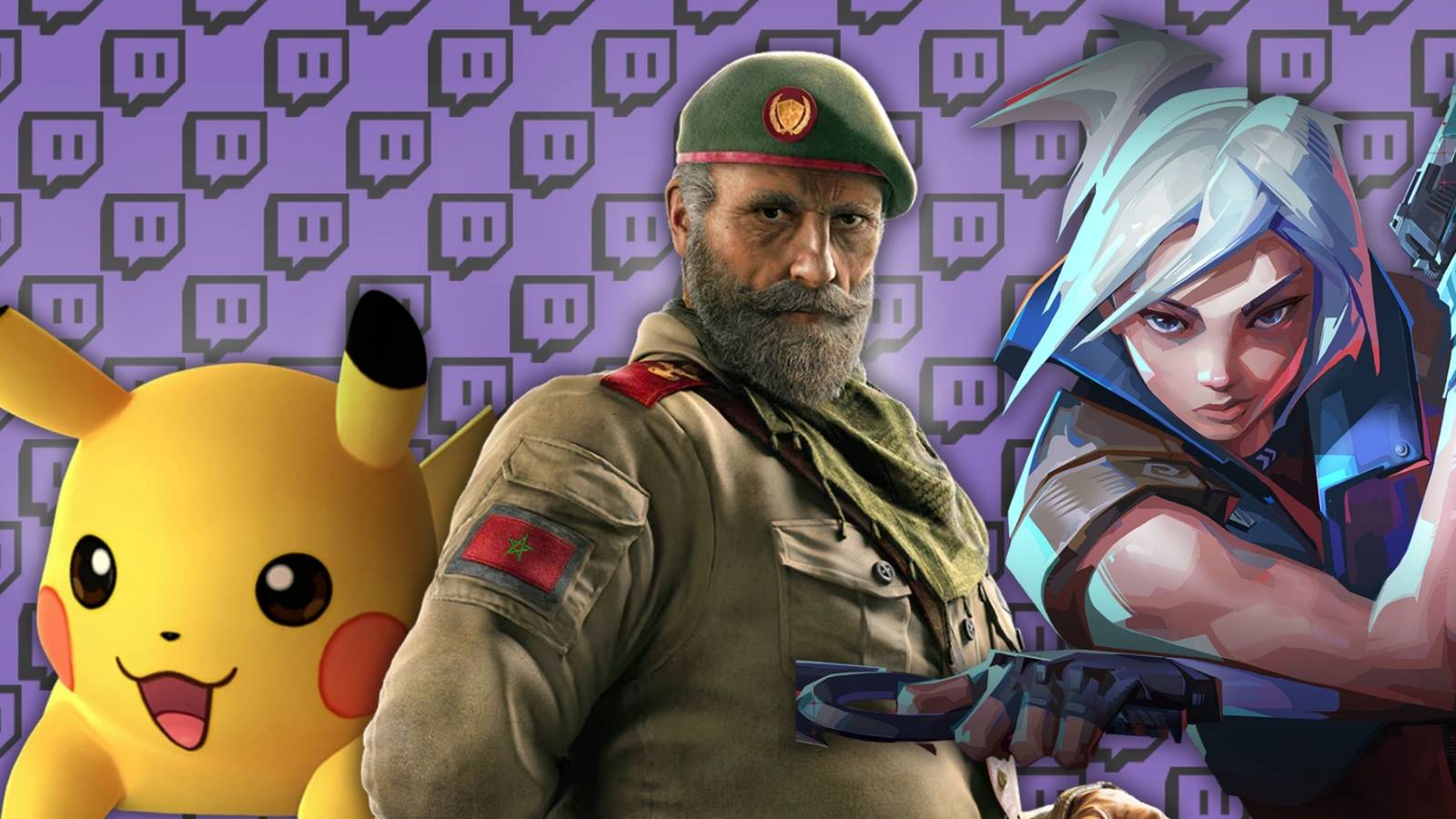
There’s a feature that’s been sitting inside Twitch since 2017 that I think deserves more credit than it usually gets. It’s not flashy, and it usually doesn’t generate headlines the way a big game announcement does, or a record breaking number of concurrent viewers, or a viral clip of a broadcaster doing something no one has seen before. It’s, at a high level, really simple: watch a stream, earn an in-game item. That’s all. That’s the whole Twitch Drops pitch.
10 Indie Games That Really Feel Like The Beginning Of An Entire Generation
These games have been responsible for changing our perception of interaction from their release onwards.
And yet, that simple device has rewired the way broadcasters think about live service sports — about player retention, about lapsed audiences, about the relationship between viewing and playing, and where the line between marketing and community lies. Spending time at TwitchCon Europe 2026 in Rotterdam, talking to people who manage these relationships professionally, made me realize how much strategic weight this tricky feature now holds.
The numbers alone tell most of the story. By 2024, 41 million Drops are claimed in over 6,000 campaigns. That’s not a niche feature used by a handful of studios with marketing budgets to spare. That’s a complete infrastructure. That’s a system that’s become a standard part of how publishers talk to their player bases, and understanding why it needs to go back to where it started – and what’s changed.
VALORANT Made Everyone Pay Attention

Twitch Drops existed for three years before most publishers really understood what they were capable of. The feature was launched in 2017 with modest implementations – small in-game items, limited availability, nothing fundamentally changed how studios plan their release strategies. What changed was VALORANT’s closed beta in April 2020, and it was definitely changing.
Starting April 3rd, participating streamers dropped VALORANT beta keys to random viewers in their chats. The only way to secure the key was to have both a Riot account and a Twitch account, and watch a lot of VALORANT. Riot has gotten its new game – a game that hasn’t even come out yet – to live streaming. The result was nearly 150 million hours watched on Twitch in the first seven days of the game on the platform. VALORANT briefly captured nearly a third of Twitch’s audience. Broadcasters who played it saw their numbers explode because viewers needed to watch to get a chance to win.
People wanted to watch VALORANT content both because they were interested and because they wanted key drops. Broadcasters who play VALORANT got the highest audience. The Twitch influencer streaming VALORANT wasn’t just providing free marketing for Riot’s new shooter — they were benefiting themselves. That feedback process — where the publisher benefits, the streamer benefits, and the viewer gets something tangible — is the core concept of Drops done right. Riot simply created an extreme version of itself, and the industry watched carefully.
How Strategy Evolved Without Launching Windows

The VALORANT use case established Drops as a powerful launch tool. What happened in the following years was that publishers began to understand how Drops can work throughout the game’s life cycle, not just during the peak season.
Rainbow Six Siege ran a campaign to repackage Drops with new character skins and charms as a way to retain players. That’s a completely different use case from the beta launch. Rainbow Six Siege is a game that has been running since 2015 – it is, in every sense, a mature live service title. Using Drops to attract lapsed players, giving dropouts a tangible reason to come back, represents a more sophisticated understanding of what a feature can do. It’s not about generating hype. It’s about maintenance. In terms of keeping the game populous and the community alive through the natural ebbs and flows of long-term player retention.
Twitch Drops has become the go-to streaming event for bringing the gaming community together, with campaigns able to increase weekly viewership by massive amounts – in the case of Hunt: Showdown 1896, that number reached 454%. That kind of spike around a certain campaign window has become a tool in itself — a way for studios to create a moment of collective attention around an update or seasonal launch that might otherwise pass without much event.
What Anadege Freitas Knows That Most Publishers Are Still Learning

Anadege Freitas came to Twitch after more than a decade in the gaming industry. He’s seen how studios approach the concept of community internally – Nintendo, Hasbro, Activision Blizzard, where he launched Warzone. He thinks about the relationship between publishers and the audience that comes from a place of real experience, not just representing the platform, and when he talks about what works and what doesn’t in campaigns driven by creators, the transmission line is always the same word: authenticity.
“Every time we see something that seems fake, or we see it over-produced, we tend not to believe it,” he told me. That instinct — the audience’s ability to see when something isn’t real — lies at the heart of why Drops campaigns succeed or fail. Machines can be built well. Rewards can be desirable. But if the broadcasters running the campaign don’t care about the game, if everything sounds like a gimmick, the audience notices. They are always aware.

How is Minecraft still popular? A Closer Look from TwitchCon Europe 2026
The 2011 game has more players of the month than ever before. Minecraft doesn’t just survive the competition, it doesn’t even recognize it.
What he describes as the ideal version of the relationship between the product and the creator is what he calls the cultural moment – not the type embedded in the content, but the symbol as part of something that already has meaning. “It’s not just a sign,” he said. “Having a product as part of a moment, a cultural moment.” A Release Campaign connected to a tournament final, or a major content update, or a commemorative event is naturally part of something that players already care about. The discount is a reward for participating in that period – and that is significantly different from a reward for viewing time.
Nowhere was that philosophy more clearly demonstrated than at TwitchCon Europe 2026 itself. Minecraft, as the presenting sponsor, distributed Minecraft Capes to the attendees – and for anyone even slightly familiar with the game, the importance of that is hard to overstate. Capes are among the most coveted cosmetics in the entire history of Minecraft, they are rare enough that having a cape has always been a semblance of peace within the community.
But they weren’t just kicked out the door. To get one, attendees had to collect emeralds through a series of activities scattered throughout the area – sharing a photo with a giant LEGO Minecraft chicken, solving a puzzle that happened to reveal the release date of Minecraft Dungeons 2, playing games at various booths. A small amount was also distributed via Twitch Drops to those watching at home.
Everything was the concept of Drops made physical – watch, participate, share, accept – extended beyond the stream and into a meeting hall filled with exactly the kind of people who understood what they were working for. The distinction between an in-game reward for viewing and an in-person reward for self-expression has completely collapsed, and what remains is the same core idea: community is a product, and being a part of it should feel like it means something.
The Creator Economy Context

I want to put all of this in a broader context, because the balance of what’s happening with live game marketing and creator-driven content is important. The global market for the creative economy was estimated at $252 billion by 2025 and is expected to reach over $1.3 billion by 2033. The video streaming segment leads that market. Growth does not slow down.
Anadege made a point that I think captures what this means for the relationship between Twitch, publishers, and communities around live gaming. He described a shift he’s seen in how new creators are coming to the platform — people who already have a large following elsewhere, are discovering that Twitch offers something their existing platforms don’t.
“The Twitch community was helping him,” he said of the new broadcaster he had on board. “It shows what emotions are, how he can make money. The community was helping him broadcast live.” That’s the idea of being what Twitch, at its best, represents. And Drops – when done right – are a way to extend that feeling of being part of the game being played. You watch, you earn, you play, you belong.
What This Means for Publishers Going Forward

Studios that have been using Drops intelligently for several years now have a greater advantage than those that still treat them as promotional afterthoughts. The difference isn’t really about budget or scale – it’s about understanding that Drops are more powerful when combined with how the game lives, not just how it starts.
A campaign tied to a content update keeps the sense of community visible. A campaign that accompanies an esports event gives casual viewers a reason to tune in and rewards existing players for caring. A reengagement campaign aimed at lapsed players removes one of the most important barriers to return – the idea that there is no particular reason to return today more than any other day. Drops give people a reason. Small, in absolute terms. But the reason is still there.
The creative economy is growing. The audience that depends on live sports spends a lot of time watching before they play, or watching instead of playing, or moving between the two depending on the day. Publishers who build their live service strategies with that reality in mind — who understand that viewing is not separate from play, but closely related to it — are the ones who will retain demographics, drive engagement, and keep their communities coming back year three and year five and year ten.
Twitch Drops isn’t the answer to any of that. But it is a much more important part of it than its form suggests.
8 Best MMOs Where Grinding Is Fun
Not all MMO grinds are created equal—some feel like work, while others are incredibly rewarding. These MMOs offer the most exciting grind.