Esports fans want to predict tournament results but states (and Faker) are fighting it


This week, as before, there were further developments in the legal battles against the prediction markets. But data released by Riot Games and GRID suggests they are fighting a losing battle. Fans want to predict the outcome of events and will undoubtedly find a way to do just that.
More than 1.7 million players interacted with Crystal Ball and Pick ‘Ems during the latest MSI, according to data released by GRID and Riot.
This tournament marked the first time that Riot used GRID data for live sports to power Crystal Ball.
“At Riot, esports fans have always been at the center of what we do,” said Doug Watson, Head of Business Strategy for Global Esports at Riot Games in a statement.
“Crystal Ball is a great example of what can happen when you listen to the community and use official data where fans are already engaged. The same data used across loyalty, new streams, and more, now improves the LoL fan experience in real time.”
Predicting results affects fans
The Crystal Ball interaction shows how predicting the outcome of an event can keep fans interested.
“I spend more time invested in the tournament than usual because of the Crystal Ball,” wrote one Reddit user. “I watch every single game, keep track of stats, hope my picks are right, compete with my friends and try to win the jackpot – every skin in the game. It makes every game important to me even if my favorite team is out.”
The same can apply to using prediction markets or gambling sites. The rise in popularity of platforms like Kalshi and Polymarket have given fans more ways to have “skin in the game.”
GRID also partnered with Polymarket last month. In this agreement, Ari Borod, President of Sports Business Development at Polymarket, said: “Sports is moving fast, and markets should be built on it. GRID offers our users official data with low latency and access to live streaming in real time, all in one place. It is a better, diversified experience for traders and a great opportunity for the game.”
Kalshi has also increased its esports offerings, which are attracting increasing trade volumes. Data from June showed that CS2 dominates the market, followed by League of Legends.
Washington could ban online sports betting
Fans show that they want to predict events, be it with a Crystal Ball, betting on prediction markets, or betting on sports books.
However, depending on the state you live in, your chances of doing so vary greatly. Prediction markets were open across the country, but the free market could be short-lived. It is moving in this direction at high speed.
Washington state appears poised to follow Nevada and Michigan in successfully banning Kalshi. The state issued a preliminary injunction against the company on Monday and could enforce the ban as soon as next month. Washington does not offer legal online esports betting, unless you are at one of the state’s licensed casinos.
Esports betting is targeted for many different reasons, but sometimes there is a misunderstanding of sports and its components by the older generation.
Prediction markets and loot boxes encourage child gambling

An argument against prediction markets is that they encourage younger users to gamble more effectively. Most states set the legal gambling age at 21, but betting markets allow 18-year-olds to “trade.”
Loot boxes in games have also been blamed for sending players down the slippery slope to gambling addiction.
A study released in Canada this week showed that users who buy random prizes are more likely to develop all kinds of problems, including gambling addictions, mental health problems, and other compulsive behaviors.
Faker joins the fight against illegal online gambling
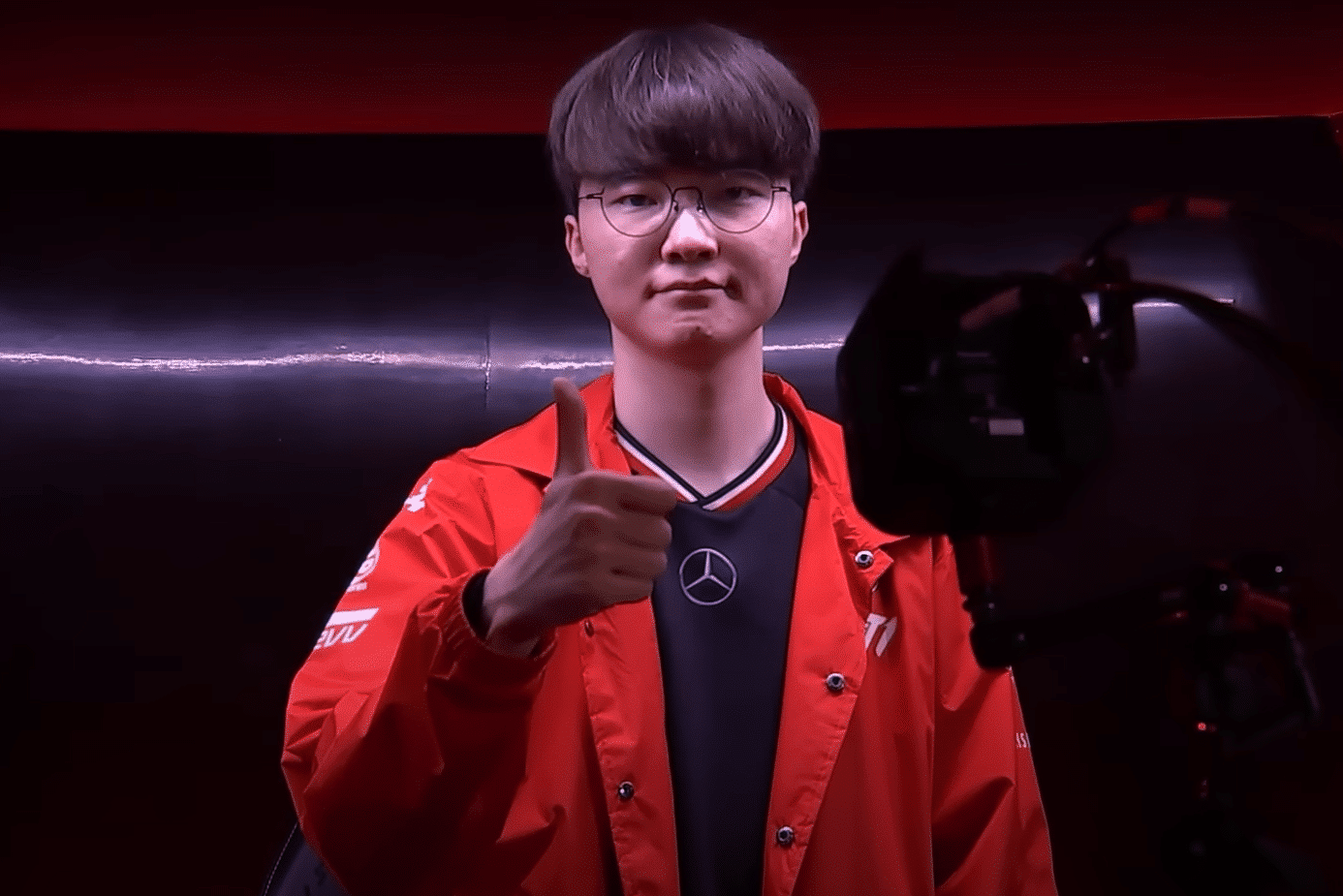
To combat the spread of online gambling in sports arenas, LoL legend Faker has announced that he is becoming an honorary member of the Korean police.
The six-time world champion said he will “actively participate in diplomatic activities, including publicizing the dangers of online gambling to young people.”
Gambling is highly restricted in Korea, but estimates show that the black market is worth more than $80 billion. Since esports is so popular, the segment can contribute significantly to that number. Police shut down gaming cafes that offer youths the chance to bet on esports and other events.
Police hope that Faker’s presence will help crack down on the illegal industry and “give courage to young people who need to report” anyone doing this work “without hesitation”.
Police say the crackdown on online gambling is “ongoing,” as US states cracking down on betting markets can sympathize.