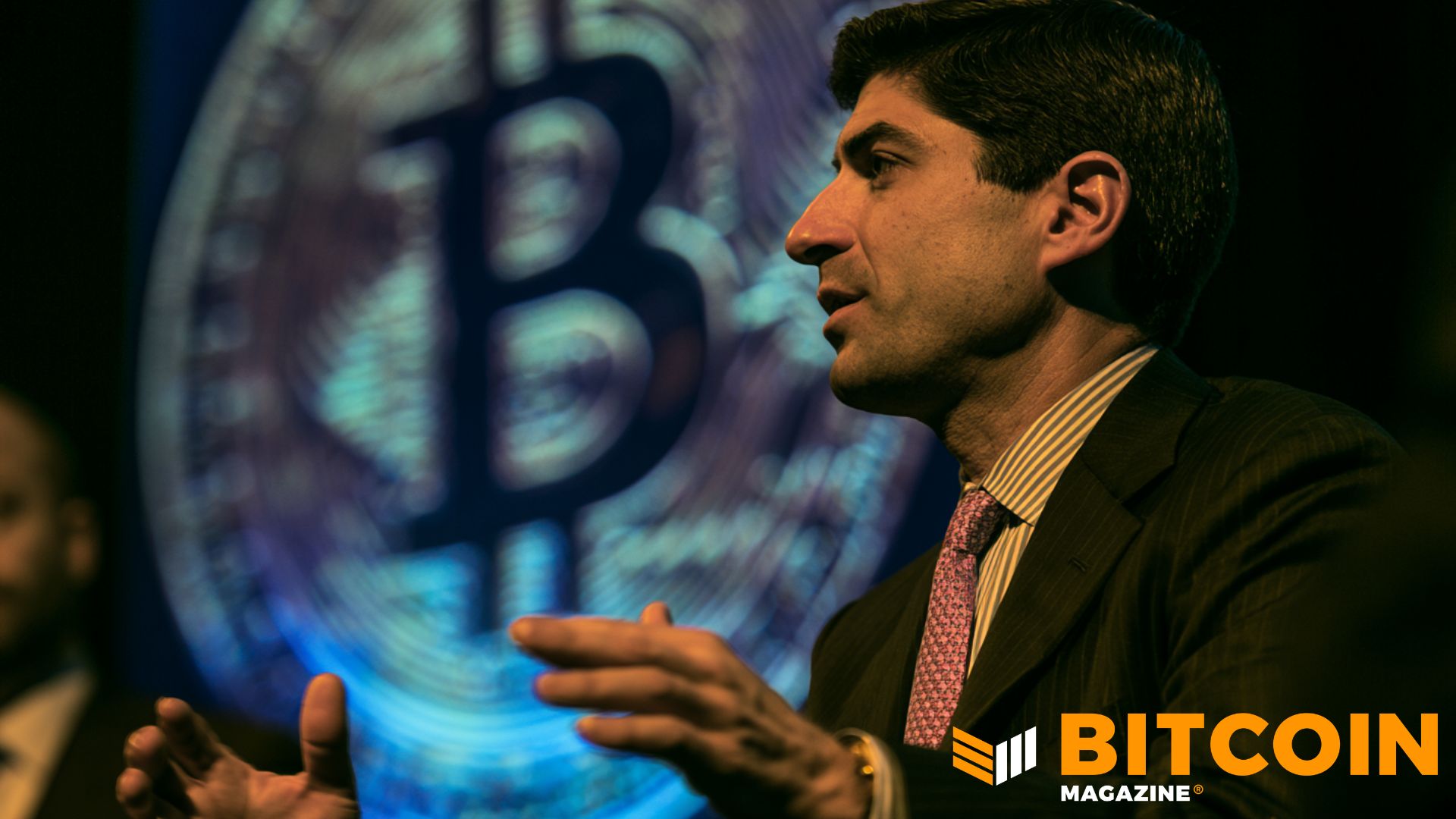
Several prominent leaders of Bitcoin adoption gathered on the Nakamoto Stage at the Bitcoin Summit 2026, charging that the unusual industry dynamics – where direct competitors are openly cooperating – could be the defining feature of the current institutional push for the digital asset.
The panel featured David Bailey, CEO of Nakamoto Inc., Alexandre Laizet of Capital B, and Dylan LeClair of Metaplanet, moderated by George Mekhail of Bitcoin for Corporations.
Bailey began his speech by positioning Bitcoin as something close to a free movement, arguing that rising prices in peer companies are boosting the wider ecosystem rather than consuming it. He pointed to UTXO Management’s investments in both Capital B and Metaplanet as a tangible manifestation of that philosophy — a structure that blurs the line between investor and participant.
LeClair echoed this sentiment, saying that Bitcoin is different from almost every other industry in that participants share strategies and build on each other’s work. Laizet opened his remarks by thanking his fellow participants and calling them an inspiration in improving the company’s acquisitions – language that would stand out at almost any other industry conference.
Institutional barriers are stifling bitcoin
Despite the optimism, the panel was tight-lipped about the structural hurdles ahead and made it clear that bitcoin is “still in its early days.” LeClair provided a surprising data point: he estimated that 99% of institutional funds cannot currently access Bitcoin or Bitcoin ETFs due to mandate restrictions that put most funds into fixed income or certain asset classes.
For LeClair, that barrier is exactly what makes the present so fast — and why infrastructure, not ideas, is the biggest challenge.
He described hyperbitcoinization not as a single success event but as a slow building process that requires institutional pipelines – storage solutions, compatible products, and regulatory clarifications.
He praised Michael Saylor for identifying and starting to address that gap in traditional finance, and retreated to what he called a paradox: Bitcoiners who expect extreme price appreciation while at the same time rejecting the institutional participation that would make such a valuation possible.
Bailey emphasized that framework, noting that only a few hundred companies currently hold Bitcoin on their balance sheets, and that the strategy is in the early stages of charging a path that others are beginning to follow. He asserted that every economic actor will eventually need to interact with Bitcoin, and that any view that does not include a small group of participants runs counter to the basic structure of the commodity.
“For hyperbitcoinization to happen … every economic agent in the world will have to use bitcoin,” Bailey said.
Laizet has positioned Capital B as a method designed to meet institutional investors where they are. He highlighted BlackRock’s Bitcoin ETP and the company’s growing program of institutional clients as live examples of European investors gaining meaningful Bitcoin exposure through compliant channels.
For customers who cannot tolerate the volatility of Bitcoin directly, he said digital credit products offer an alternative – structured instruments that provide exposure without requiring full price risk.
Laizet had a visible push in the chain of financial services that are being built around Bitcoin, saying that their owners will need more institutions that are willing to extend loans against their Bitcoin positions – allowing access to money without forcing sales. He framed this as a matter of respect for the property: users, he said, are looking for financial partners who treat Bitcoin as a security worth keeping, not one that will be liquidated in the first instance.
Bitcoin is coming in with traditional currencies
Bailey provided perhaps the sharpest speaking opportunity of the panel in discussing Bitcoin’s relationship with legacy funds. He argued that because the underlying technology of Bitcoin is immutable, no financial institution – including BlackRock – can change its properties. The dynamic, he said, runs in only one direction: “Bitcoin is changing BlackRock,” he said.
He acknowledged the growing divide within traditional finance between institutions that accept Bitcoin and those that oppose it, describing advocates as “barbarians at the gate.”
He said that fragmentation makes it urgent to build a large investor base that can influence policy and shape the rules of the financial system in Bitcoin’s favor.
Bailey suggested that critics of BlackRock’s involvement today will face an even greater challenge when central banks, including possibly the Federal Reserve, begin to acquire Bitcoin.
Mekhail, in moderation, added context to the timeline, noting that corporate Bitcoin exists to support companies navigating this entry point – and warns that the window to be at the beginning of the corporate adoption cycle is shrinking faster than many realize.