Introduction
One of the most common mistakes businesses make in IT service management is believing that a new tool will automatically solve operational problems.
The field is being changed. New automatic features are introduced. Dashboards are more advanced. Hopes are rising fast.
But months later, support teams are still struggling with delayed decisions, inconsistent workflows, and inefficiencies.
Why?
Because the problem was not the tool alone.
For many organizations, the real problem is low ITSM maturity.
The truth is simple: even the best ITSM platform cannot compensate for weak processes, unclear ownership, or ineffective service management practices. Businesses that focus solely on software selection often overlook the operational foundation required to make those tools successful.
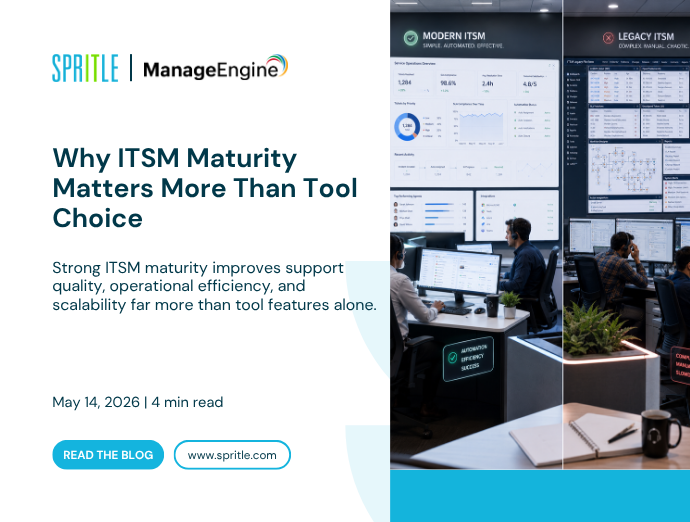
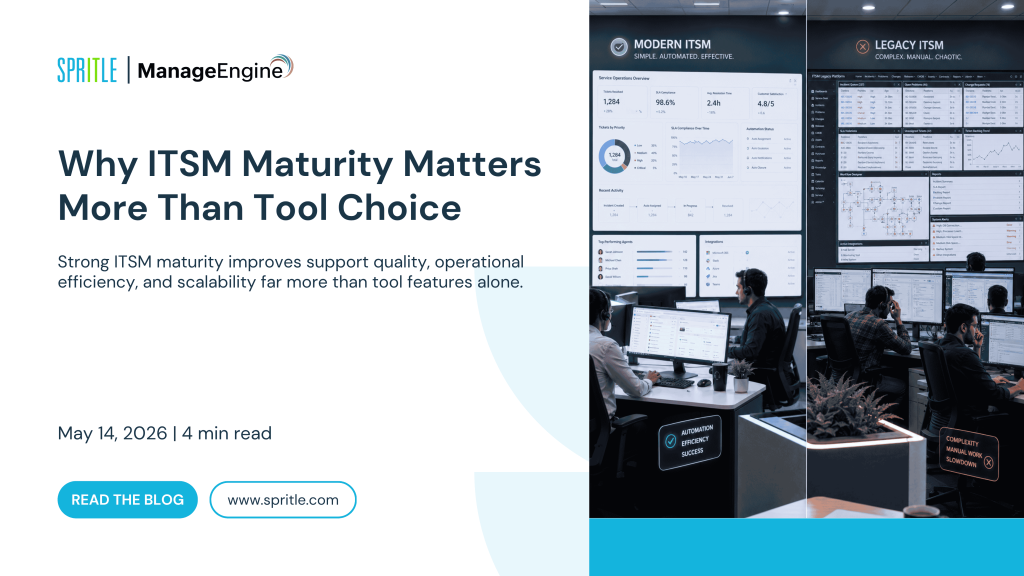
This is why ITSM maturity is more important than tool selection.
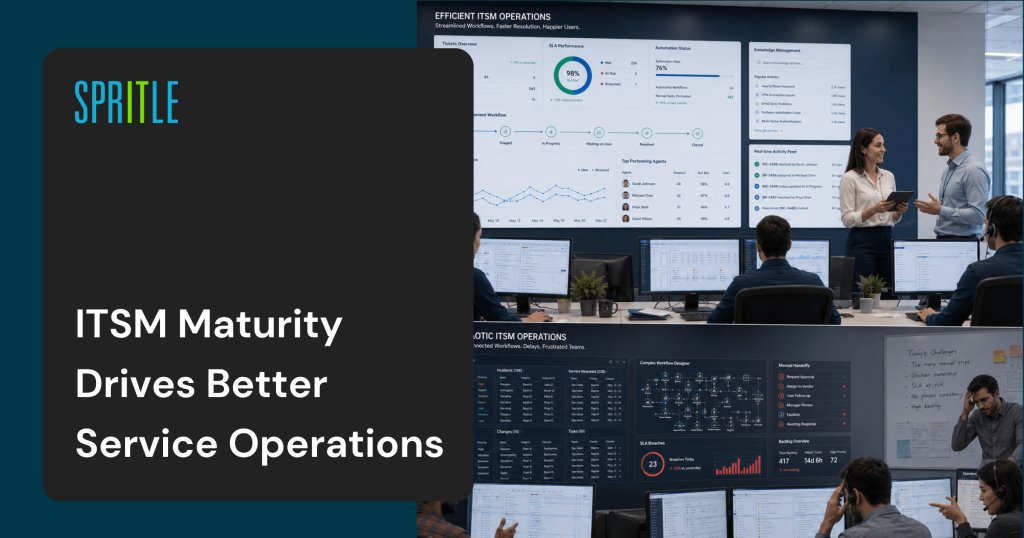
What is ITSM Maturity?
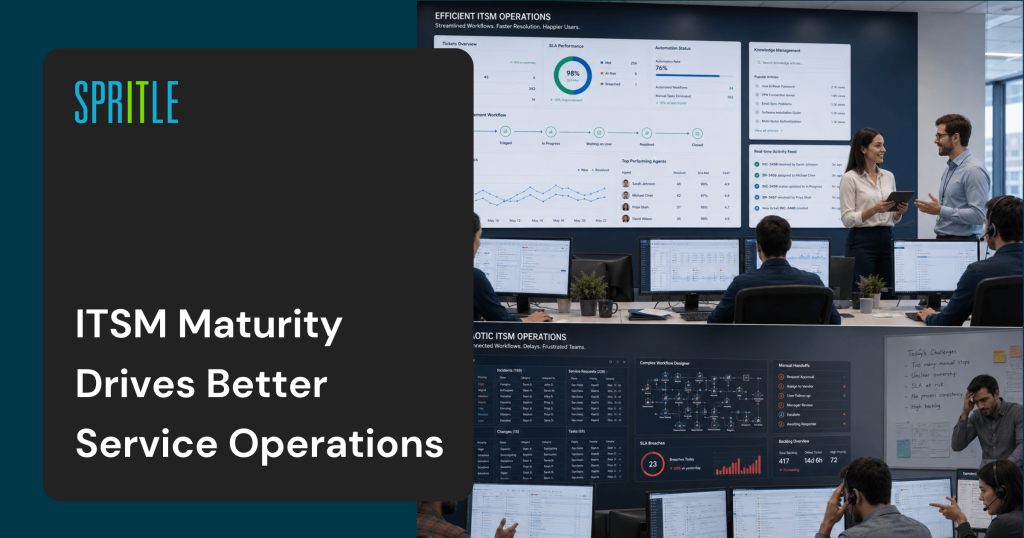
ITSM maturity refers to how effectively an organization manages its IT services through systematic processes, governance, automation, and continuous improvement.
A mature ITSM environment is not defined by how many features the platform offers. It is defined as teams working consistently and effectively.
Organizations with high ITSM maturity tend to be:
- A clearly documented workflow
- Defined service identity
- Fixed incident handling procedures
- Measurable KPIs and SLAs
- Strong communication between teams
- Continuous process improvement techniques
On the other hand, low maturity areas tend to rely on manual labor, inconsistent ticket management, and reactive decision making.
The difference becomes obvious during daily operation.
Mature organizations respond quickly, reduce service disruptions, and measure efficiency.
Why Businesses Are Overchoosing Tools
The ITSM market is flooded with heavy-duty platforms that promise automation, AI-driven workflows, analytics, and seamless integration.
Naturally, businesses think that better tools will lead to better service management.
But tools only give power.
They can’t fix broken workflows or bad work habits.
For example:
- Automating a vague process increases confusion
- Advanced dashboards don’t work if the reporting data isn’t consistent
- AI recommendations lose value without proper ticketing
- Self-help sites fail when information articles are out of date
This is why many organizations invest heavily in ITSM platforms but still fail to improve service quality.
Without operational maturity, even premium platforms become underutilized systems filled with unused features.
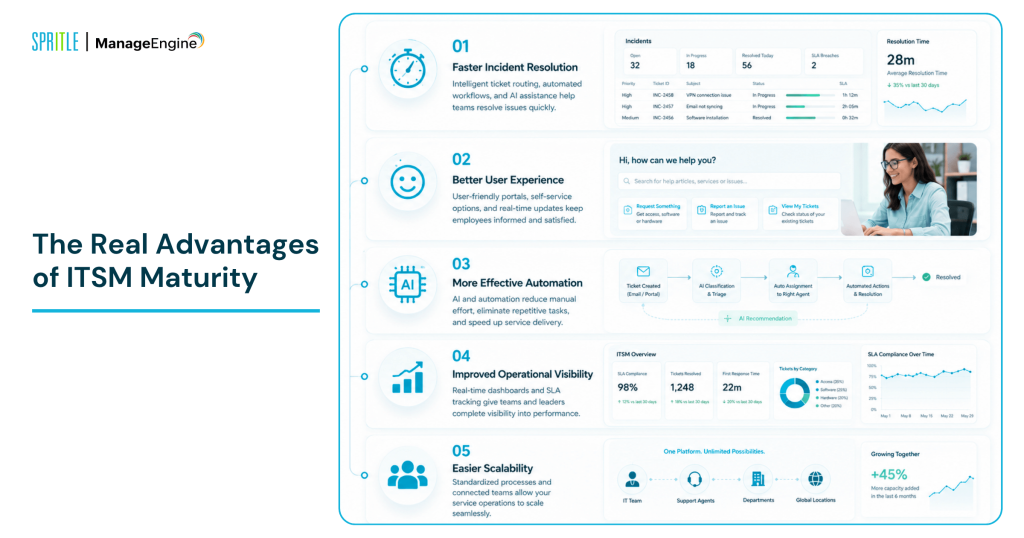
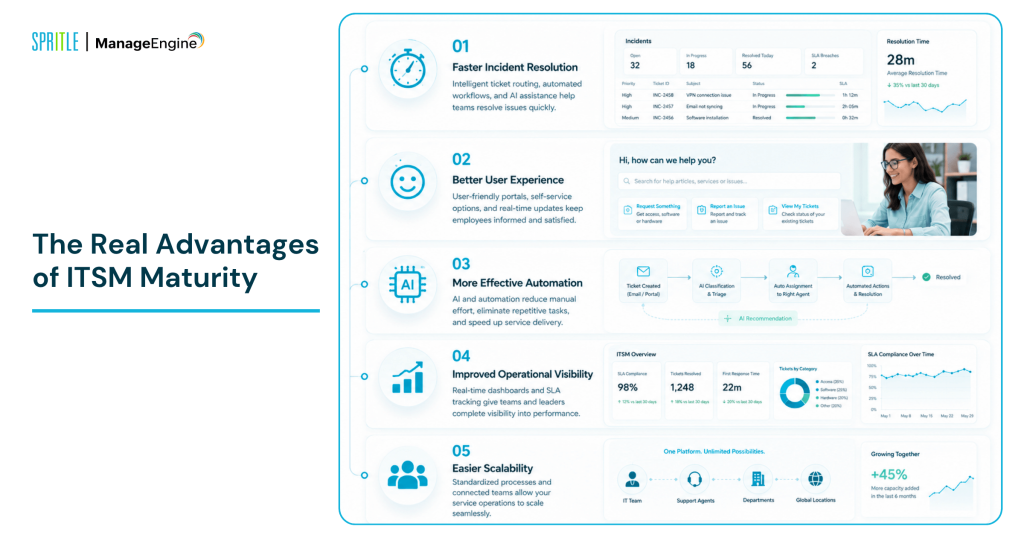
The Real Benefits of ITSM Growth
Rapid Incident Response
Mature ITSM environments create clarity.
Support teams understand escalations, ownership responsibilities, and resolving issues. This reduces latency and improves response efficiency.
Instead of dealing with problems chaotically, teams follow a structured workflow that speeds problem resolution.
Better user experience
Users care less about the platform being used and more about whether problems are solved quickly and efficiently.
Organizations with mature ITSM practices deliver a consistent support experience, better communication, and predictable service quality.
That consensus builds trust throughout the organization.
The Most Effective Auto
Automation is only effective if the processes are stable.
Businesses often try to do it too early, without stopping the workflow first. This often creates disparate tasks instead of efficiency.
Mature organizations automate on purpose because they understand exactly where automation adds value.
Improved Performance Visibility
Strong ITSM maturity improves reporting accuracy and service visibility.
When workflows are standardized, businesses gain reliable insight into:
- Incident trends
- Maintenance operation
- Compliance with SLA
- Ongoing performance issues
- Use of resources
This helps leadership teams make smarter operational decisions.
Easy Scalability
As organizations grow, service requests grow rapidly.
Businesses with mature ITSM practices can face growth more effectively because their processes are already designed for consistency and efficiency.
Without maturity, scaling often leads to performance overload.
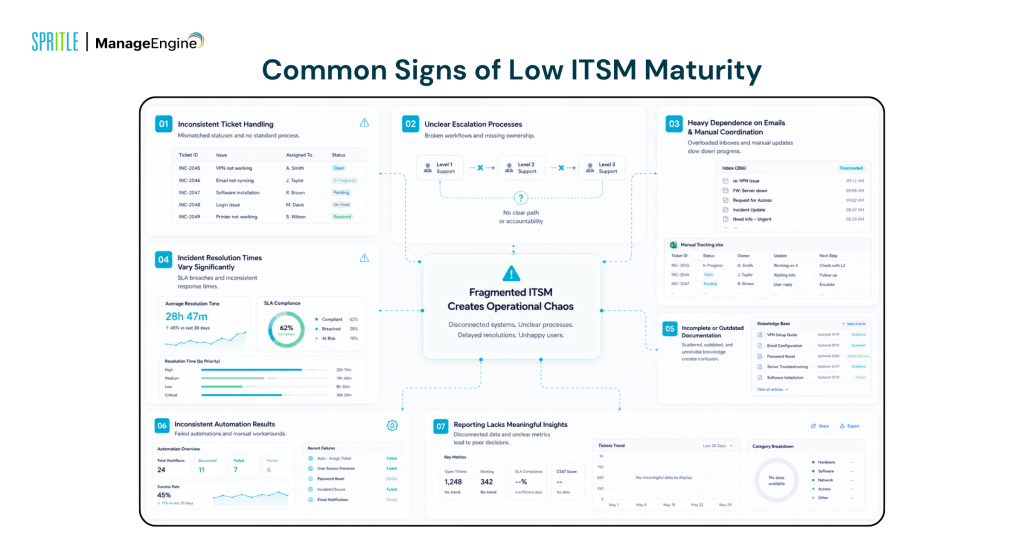
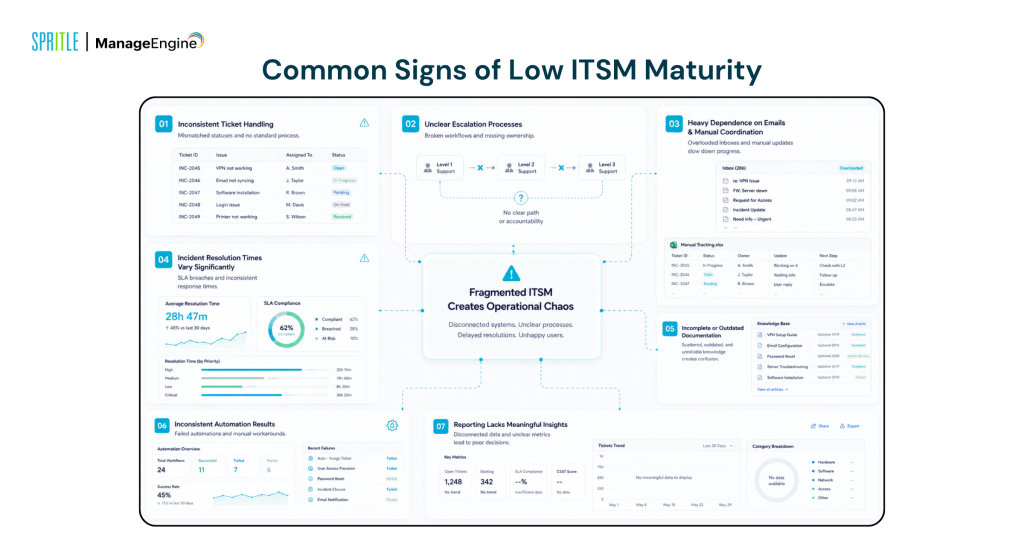
Common Symptoms of ITSM Low Growth
Many businesses struggle with IT performance without realizing the root of the process is process maturity.
Here are some common warning signs:
- Different groups handle tickets differently
- Ascension processes are unclear
- Teams rely heavily on email and hand-to-hand communication
- Incident resolution times vary widely
- Documents are incomplete or out of date
- Automation brings inconsistent results
- Reporting does not contain meaningful information
These are process problems, not software problems.
Changing tools without fixing these gaps usually creates a temporary improvement at best.
How Businesses Can Improve ITSM Maturity
Plan Key Workflows
Create clear and repeatable processes for incident management, request management, change management, and escalation.
Consistency is the foundation of operational maturity.
Strengthen Information Management
Well-maintained documentation reduces repetitive support work and helps teams resolve issues faster.
A strong knowledge base also improves onboarding and operational continuity.
Focus on Key Metrics
Track KPIs that reflect actual service performance, including:
- Mean time to repair (MTTR)
- Early response time
- Compliance with SLA
- Customer satisfaction scores
- Patterns of recurring events
Objective metrics help identify opportunities for improvement.
Do it Automatically
Automation should support mature workflows, not replace an existing structure.
Start with repetitive, high-volume tasks and increase automation as processes become more stable.
The conclusion
Choosing the right ITSM platform is important, but it should never be the primary focus.
The long-term success of IT service management depends more on operational maturity than on software features.
Organizations with mature ITSM practices consistently outperform businesses that rely solely on advanced platforms. They deliver faster support, improve service quality, reduce operational friction, and scale more effectively.
Technology can improve service management.
But mature processes are what drive truly sustainable results.
Frequently Asked Questions
1. What is ITSM maturity?
ITSM maturity refers to how well an organization manages, standards, and improves its IT service management processes.
2. Why is ITSM maturity more important than tool selection?
Because the tools support the workflow, but the processes of the adults determine how the services are delivered effectively.
3. Can a new ITSM platform solve inefficiencies?
Not completely. Without strong processes and governance, even advanced platforms struggle to deliver consistent results.
4. What are the signs of low ITSM maturity?
Common symptoms include inconsistent ticket management, unclear escalation mechanisms, excessive manual labor, and unreliable reporting.
5. How can businesses improve ITSM maturity?
Businesses can improve maturity through process standardization, better documentation, KPI tracking, and strategic automation.
6. Does ITSM maturity help with resilience?
Yes. Senior ITSM processes help organizations manage growing workloads more efficiently while maintaining service quality.