Agentic AI · Workflows · 2026
How Agentic AI Will Change Workflows in 2026
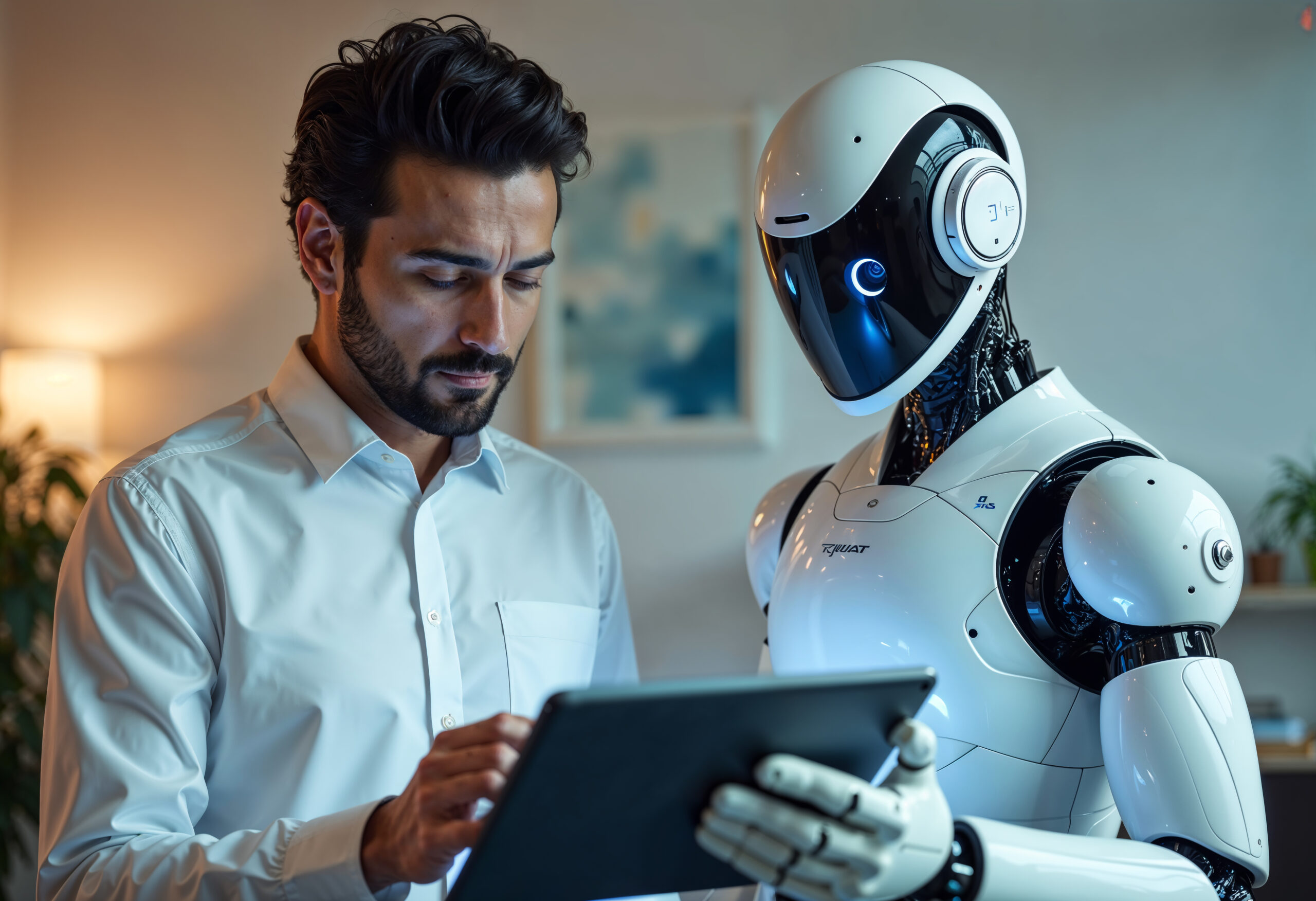
In 2026, AI jumps from helper to digital coworker. Agentic systems plan, use tools, and execute multi‑step tasks, shifting work from step‑by‑step execution to goal ownership. Microsoft calls this the rise of “AI agents” that act like teammates, while Google details how agentic search and AI Mode break complex goals into sub‑queries and take action with links and bookings. Sources.

TL;DR — What’s changing & why it matters
- Agents become coworkers: 2026 brings AI agents that plan and act with guardrails, not just chat. Microsofti-7-trends-2026/)[2](https://www.technologyrecord.com/article/microsoft-highlights-ai-agents-security-and-infrastructure-as-2026-priorities)
- Search becomes agentic: Google’s AI Mode fans out queries, synthesizes answers, and even completes actions (e.g., bookings), redefining discovery → execution in one flow. [3](https://blog.google/products-and-platforms/products/search/google-search-ai-mode-update/)[4](https://news.designrush.com/google-ai-mode-agentic-booking-saas-2026)
- Pilots → Production: Most firms use AI, many test agents, but few scale; winners redesign workflows around agents, not just “add AI.” [5](https://www.mckinsey.com/capabilities/quantumblack/our-insights/the-state-of-ai)
What is “agentic AI” in 2026?
Agentic AI refers to goal‑oriented systems that can break objectives into tasks, call tools/APIs, collaborate with other agents, and adapt with feedback. It’s a step beyond copilots: agents plan, execute, and verify outcomes with minimal prompts. Analysts expect rapid enterprise embedding of agents in 2026. [6](https://machinelearningmastery.com/7-agentic-ai-trends-to-watch-in-2026/)[7](https://desinance.com/ai/gen-ai/agentic-ai-trends/)
OpenAI’s trajectory illustrates this shift: Deep Research introduced multi‑step web research as an agent; subsequent updates integrated visual browsing and “agent mode,” moving from passive Q&A to autonomous work. [8](https://openai.com/index/introducing-deep-research/)
Why 2026 is the inflection point
- Productization: Major platforms (Microsoft Copilot, Google AI Mode) are formalizing agents with identity, governance, and cross‑app orchestration. [1](https://news.microsoft.com/source/emea/features/whats-next-in-ai-7-trends-2026/)[9](https://www.sentisight.ai/what-expect-from-microsoft-copilot-2026/)
- Search → action: Google’s “query fan‑out” and agentic booking compress research and execution into a single flow. [3](https://blog.google/products-and-platforms/products/search/google-search-ai-mode-update/)[4](https://news.designrush.com/google-ai-mode-agentic-booking-saas-2026)
- Enterprise demand & data: Surveys show strong experimentation with agents but scaling gaps; redesigning workflows is the lever that correlates with impact. [5](https://www.mckinsey.com/capabilities/quantumblack/our-insights/the-state-of-ai)
How agentic workflows actually work (architecture)
| Layer | What it does | Notes |
|---|---|---|
| Orchestrator | Decomposes goal → tasks, routes to specialists | Analogous to Google’s query fan‑out in AI Mode. [3](https://blog.google/products-and-platforms/products/search/google-search-ai-mode-update/)[10](https://www.searchenginejournal.com/query-fan-out-technique-in-ai-mode-new-details-from-google/552532/) |
| Specialist Agents | Research, code, compliance, booking, security | Microsoft & industry trend pieces describe multi‑agent “pods.” [1](https://news.microsoft.com/source/emea/features/whats-next-in-ai-7-trends-2026/)[7](https://desinance.com/ai/gen-ai/agentic-ai-trends/) |
| Tools/Connectors | APIs, RPA, SaaS apps, web browsing | OpenAI Deep Research, operator‑style web agents. [8](https://openai.com/index/introducing-deep-research/)[11](https://www.financialcontent.com/article/tokenring-2026-1-13-beyond-the-chatbox-openais-operator-and-the-dawn-of-the-autonomous-agent-era) |
| Memory & Policy | Long‑term context, identity, permissions | Agent identity & safeguards emphasized by Microsoft leaders. [1](https://news.microsoft.com/source/emea/features/whats-next-in-ai-7-trends-2026/)[2](https://www.technologyrecord.com/article/microsoft-highlights-ai-agents-security-and-infrastructure-as-2026-priorities) |
| Human‑in‑the‑Loop | Approvals, escalation, exception handling | Key for safety & accountability in production use. [5](https://www.mckinsey.com/capabilities/quantumblack/our-insights/the-state-of-ai) |
High‑value use cases you can deploy in 2026
- AI research & analysis: Multi‑step web synthesis with citations and source logs (e.g., market scans, competitor briefs). [8](https://openai.com/index/introducing-deep-research/)
- Agentic search & booking: Sales demos, event tickets, reservations executed via AI Mode flows. [4](https://news.designrush.com/google-ai-mode-agentic-booking-saas-2026)
- Modernization & engineering support: Agents assist code upgrades, dependency checks, and documentation extraction.
- Ops co‑piloting → digital coworkers: Security response agents, finance close assistants, service ops triage. [2](https://www.technologyrecord.com/article/microsoft-highlights-ai-agents-security-and-infrastructure-as-2026-priorities)[5](https://www.mckinsey.com/capabilities/quantumblack/our-insights/the-state-of-ai)
Adoption Playbook: from pilots to production
- Pick outcome, not tool: Define a measurable goal (e.g., “reduce cycle time by 30%”). McKinsey finds redesigning workflows correlates with value capture. [5](https://www.mckinsey.com/capabilities/quantumblack/our-insights/the-state-of-ai)
- Start with a multi‑agent “pod”: Orchestrator + 2–3 specialists (research, compliance, data) with approvals. [7](https://desinance.com/ai/gen-ai/agentic-ai-trends/)
- Wire up connectors: Prioritize API‑first systems; add secure browsing where APIs are lacking. [8](https://openai.com/index/introducing-deep-research/)[11](https://www.financialcontent.com/article/tokenring-2026-1-13-beyond-the-chatbox-openais-operator-and-the-dawn-of-the-autonomous-agent-era)
- Identity & policy guardrails: Give agents roles, entitlements, and audit trails like human users. [1](https://news.microsoft.com/source/emea/features/whats-next-in-ai-7-trends-2026/)[2](https://www.technologyrecord.com/article/microsoft-highlights-ai-agents-security-and-infrastructure-as-2026-priorities)
- Measure agent‑native KPIs: Success rate, avg. steps, cost per task, escalations, SLA impact. [5](https://www.mckinsey.com/capabilities/quantumblack/our-insights/the-state-of-ai)
Tip: Expect discovery → action to compress (e.g., Google AI Mode). Ensure your systems can complete tasks via agents—otherwise you may be invisible in “zero‑interface” experiences. [4](https://news.designrush.com/google-ai-mode-agentic-booking-saas-2026)
Risks & how to govern them
- Runaway autonomy: Use human approval checkpoints and entitlement scoping; Microsoft urges agent identity & privileges at human parity. [1](https://news.microsoft.com/source/emea/features/whats-next-in-ai-7-trends-2026/)[2](https://www.technologyrecord.com/article/microsoft-highlights-ai-agents-security-and-infrastructure-as-2026-priorities)
- Opaque reasoning: Prefer agents that log steps, references, and tool calls (e.g., Deep Research cites sources). [8](https://openai.com/index/introducing-deep-research/)
- Cost drift: Track cost per successful task, not per token; tune small models where possible. [6](https://machinelearningmastery.com/7-agentic-ai-trends-to-watch-in-2026/)
What to measure (agent‑native KPIs)
- Task success rate (per workflow)
- Avg. steps to completion (and retries)
- Escalation rate (to human)
- Cycle time & SLA impact
- Cost per task (incl. model calls, tools)
FAQs
How is an “agent” different from a copilot?
Copilots assist per prompt; agents own multi‑step outcomes with planning, tool use, and approvals—what Microsoft frames as digital coworkers. [1](https://news.microsoft.com/source/emea/features/whats-next-in-ai-7-trends-2026/)
Where does search fit?
Google’s AI Mode uses query fan‑out to decompose complex questions, pull in sources, and sometimes complete transactions, blending research with action. [3](https://blog.google/products-and-platforms/products/search/google-search-ai-mode-update/)
What’s a realistic first project?
Try a research + compliance + publishing pod for market briefs, or an engineering assistant pod for modernization. Keep approvals for sensitive steps. [12](https://devblogs.microsoft.com/all-things-azure/the-realities-of-application-modernization-with-agentic-ai-early-2026/)
How this guide improves on 10 widely‑shared articles
-
- Microsoft “7 Trends to Watch in 2026” — Great vision on agents as coworkers and security parity; we add step‑by‑step playbook and KPIs for ops teams. [1](https://news.microsoft.com/source/emea/features/whats-next-in-ai-7-trends-2026/)[2](https://www.technologyrecord.com/article/microsoft-highlights-ai-agents-security-and-infrastructure-as-2026-priorities)
- Google AI Mode updates (I/O 2025) — Clear on query fan‑out; we connect it to enterprise workflow readiness and task completion. [3](https://blog.google/products-and-platforms/products/search/google-search-ai-mode-update/)
- SEJ / industry write‑ups on fan‑out — We operationalize with architecture layers and measurement. [10](https://www.searchenginejournal.com/query-fan-out-technique-in-ai-mode-new-details-from-google/552532/)
patterns. [13](https://blog.google/innovation-and-ai/infrastructure-and-cloud/google-cloud/ai-business-trends-report-2026/)
- McKinsey State of AI 2025 — We translate “pilot purgatory” insights into a pod design and identity guardrails. [5](https://www.mckinsey.com/capabilities/quantumblack/our-insights/the-state-of-ai)
- Machine Learning Mastery trends — We bring their multi‑agent orchestration into a concrete template with KPIs. [6](https://machinelearningmastery.com/7-agentic-ai-trends-to-watch-in-2026/)
- The Conversation (2025 agent recap) — We link protocol/standard evolution to action design in enterprises. [14](https://theconversation.com/ai-agents-arrived-in-2025-heres-what-happened-and-the-challenges-ahead-in-2026-272325)
- Acuvate expert predictions — We add implementation detail for IT (connectors, approvals, memory). [15](https://acuvate.com/blog/2026-agentic-ai-expert-predictions/)
- Desinance MAS & MCP piece — We consolidate into a single orchestrator‑specialists pattern with governance. [7](https://desinance.com/ai/gen-ai/agentic-ai-trends/)
- Azure dev blog on modernization — We align engineering use cases with business KPIs and approval gates. [12](https://devblogs.microsoft.com/all-things-azure/the-realities-of-application-modernization-with-agentic-ai-early-2026/)
Sources & further reading
- Microsoft: 7 trends to watch in 2026; agents as digital coworkers & safeguards. [1](https://news.microsoft.com/source/emea/features/whats-next-in-ai-7-trends-2026/)[2](https://www.technologyrecord.com/article/microsoft-highlights-ai-agents-security-and-infrastructure-as-2026-priorities)
- Google: AI Mode, query fan‑out, agentic booking; I/O 2025 updates. [3](https://blog.google/products-and-platforms/products/search/google-search-ai-mode-update/)[4](https://news.designrush.com/google-ai-mode-agentic-booking-saas-2026)
- Search Engine Journal: deeper details on fan‑out & Deep Search. [10](https://www.searchenginejournal.com/query-fan-out-technique-in-ai-mode-new-details-from-google/552532/)
- McKinsey: State of AI 2025 (agents, scaling gaps, workflow redesign). [5](https://www.mckinsey.com/capabilities/quantumblack/our-insights/the-state-of-ai)
- Machine Learning Mastery: agentic AI trends & patterns. [6](https://machinelearningmastery.com/7-agentic-ai-trends-to-watch-in-2026/)
- OpenAI: Deep Research agent (multi‑step web research). [8](https://openai.com/index/introducing-deep-research/)
- The Conversation: 2025 agents recap & protocols. [14](https://theconversation.com/ai-agents-arrived-in-2025-heres-what-happened-and-the-challenges-ahead-in-2026-272325)
- Desinance (MAS, MCP standardization) & Acuvate predictions. [7](https://desinance.com/ai/gen-ai/agentic-ai-trends/)[15](https://acuvate.com/blog/2026-agentic-ai-expert-predictions/)
- Azure Dev Blogs: modernization with agentic AI. [12](https://devblogs.microsoft.com/all-things-azure/the-realities-of-application-modernization-with-agentic-ai-early-2026/)
Editor’s Note
This guide reflects January 2026 information from vendor blogs, analyst studies, and product briefings. It focuses on practical, secure deployment of agentic AI in enterprise workflows. For feedback or case studies, email editor@techsparking.com.