- You can add a single video, an entire channel, a playlist, or a search result as a source in NotebookLM.
- So, you can add shorts one by one using a link or organize a playlist of shorts you want to add using an extension and add them all at once.
- This can be a problem if you have to add multiple videos or an entire channel to one notebook.
Whether you are a student or a working professional, NotebookLM can be a truly beneficial tool. Based on the resources you provide, you can do more with them. It includes creating presentations, producing audio and visual summaries, taking questions, organizing data graphically, and much more. Since Google owns both, YouTube videos work well as a source for NotebookLM. However, to add a video, you must copy the video link and paste it under sources in your Notebook. This can be a problem if you have to add multiple videos or an entire channel to one notebook. Let’s see how you can add multiple videos at once without copying and pasting each video link separately.
Add Every YouTube Channel to NotebookLM
To add multiple videos at once, you can use an extension.
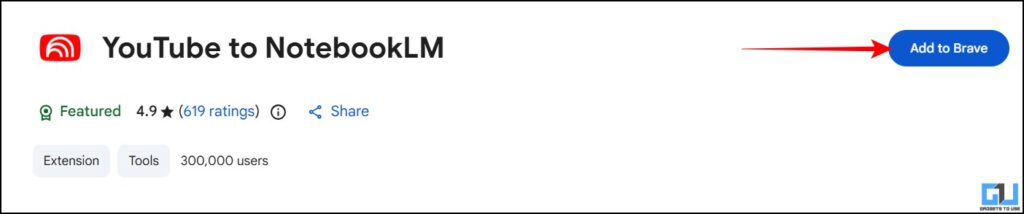
1. Open the The YouTube to NotebookLM extension in the Chrome Web Store. Here, click on “Add to Chrome” or whatever Chromium-based browser you add it to.
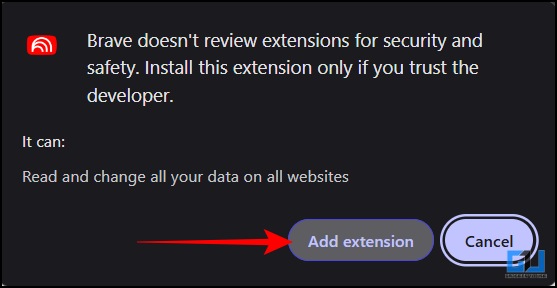
2. You will get a confirmation pop-up, click here Add an extension. Once added, you will receive a confirmation.
3. Now, to use the extension, make sure you are signed in NotebookLM with your Google Account. Open YouTube. Here, you can use it in many ways.
You’ll find that you now get a dedicated NotebookLM button when you open any video.
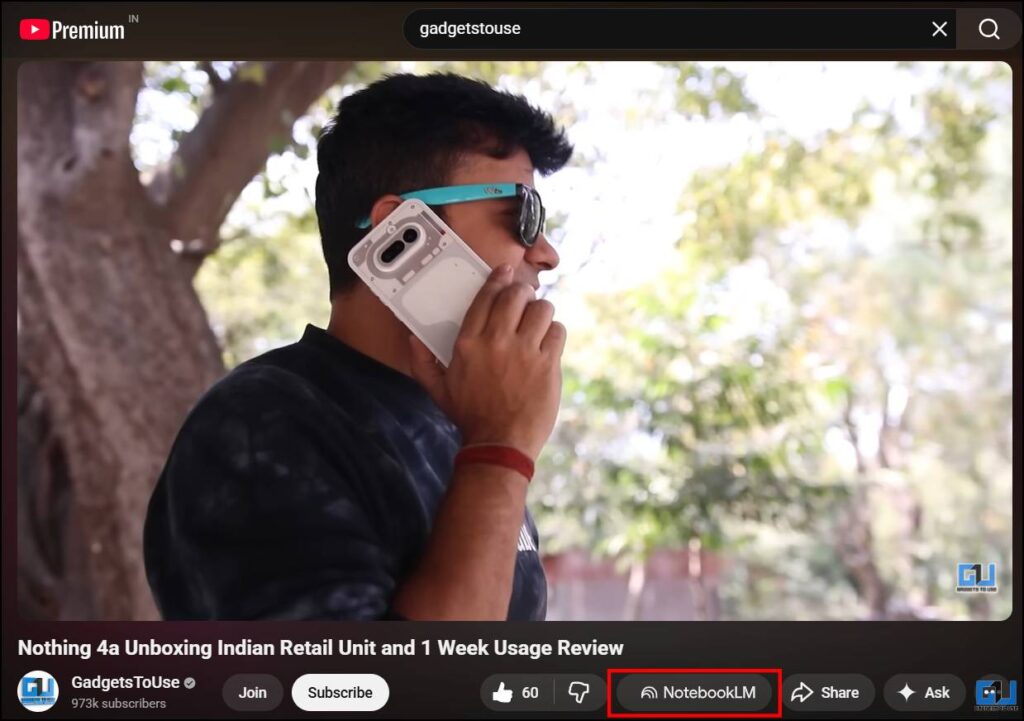
4. Once you click on it, you can choose to do it ‘Create New Notebook’ using video as a source. Or just click ‘Select Notebook’ to add that video to an existing Notebook.
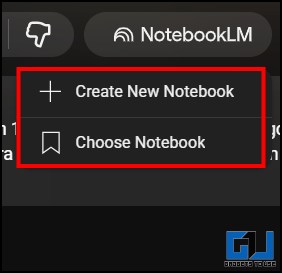
5. Videos can be added to a new or existing Notebook, under sources.
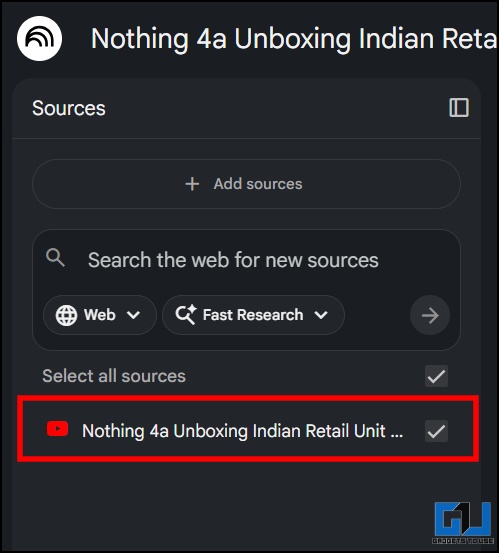
As mentioned above, this extension specifically helps you to add multiple videos as sources to Notebook with just a few clicks. Besides one video, you can add:
Entire YouTube channel
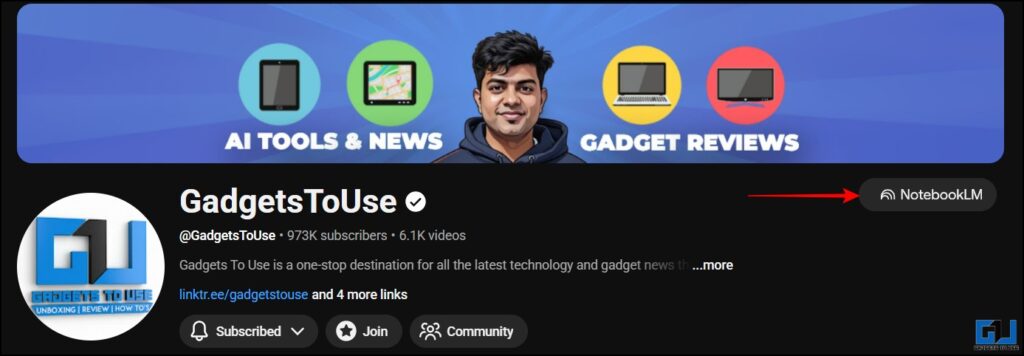
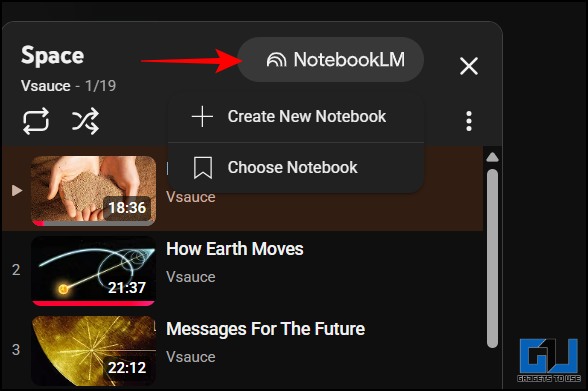
Curated playlists from any channel and your private playlists, too.
You can also add a number of videos that come up in the search results as sources.

Extension for Non-Chromium Browsers
If you’re using a non-Chromium-based browser like Mozilla Firefox, you can add the same extension there as well.
1. Open the The YouTube to NotebookLM extension in Firefox Browser Add-ons. Here, click on “Add to Firefox“.

2. You will find a pirate. Here, hit ‘Add’. Once added, you will receive a confirmation.
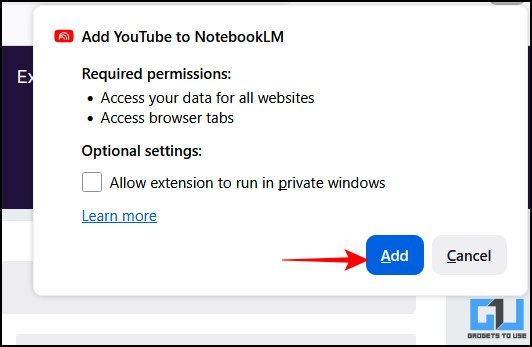
3. It works the same way as it does in Chromium-based browsers. You can add a single video, an entire channel, a playlist, or a search result as a source in NotebookLM.
Frequently Asked Questions
Q. How many videos can I add to one notebook?
In the free version, you can add 50 sources per Book. Whether it’s video links, PDFs, website links, or more. However, if you have a Google AI Pro subscription, that limit goes up to 300 per Notebook.
Q. Can I add multiple YouTube Shortcuts to an extension?
No, the extension is not compatible with YouTube Shorts as of now. So, you can add shorts one by one using a link or organize a playlist of shorts you want to add using an extension and add them all at once.
Wrapping up
Using the YouTube to NotebookLM extension can make your tasks easier. Especially if you are someone who gets most of your information from YouTube videos. The extension works very well, allowing users to add multiple videos to NotebookLM with just a few clicks. Developers have in mind both users of Chromium-based browsers and users of a browser such as Mozilla Firefox, which is not based on Chromium.
You may also like to read:
Have questions related to our how-to guides, or anything in the tech world? Check out our new GadgetsUsing an AI Chatbot free, powered by ChatGPT.
You can also follow us for the latest tech news at Google News or for tips and tricks, smartphone and gadget updates, join GadgetsToUse Telegraph Groupor subscribe to GadgetsUsing a YouTube Channel for the latest updated videos.
Was this article helpful?
YesNo