Building an AI-Driven Preventive Healthcare Ecosystem Not Just Another Healthcare App

When a client first approached us with the idea of building an AI-driven healthcare platform focused on cancer care and long-term health, the requirement initially sounded like a risk assessment system.
But honestly, after the first few conversations, it became very clear that this was much bigger than a questionnaire, an AI results generator, or an appointment booking application.
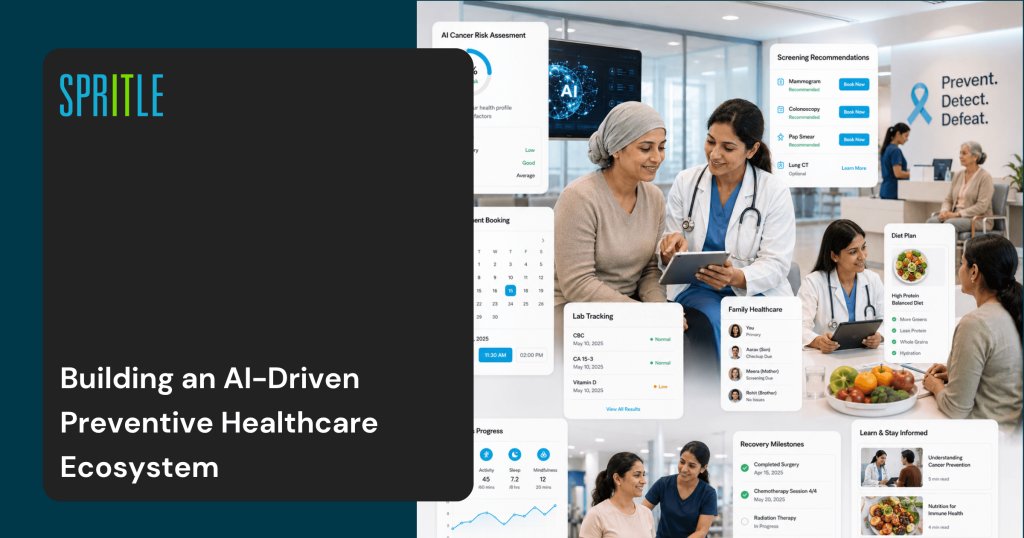
The idea was to create an entire healthcare ecosystem that can stay connected with users throughout their long-term journey of cancer prevention, wellness, treatment, recovery, and lifestyle.
And that changed everything.
The platform was never intended to be something that users open once, finish exploring, and forget about. The client wanted the system to continue to evolve with the patient over time almost like a digital health companion that evolves alongside the user’s healthcare journey.
That idea became the most interesting part of the whole project.
Initially, many discussions started about AI-powered cancer risk assessment. A program is needed to assess a person’s lifestyle, family medical history, Preexisting conditions, History of immune testing, behavioral responses, wellness index, etc. But very quickly, the discussions went beyond the test.
The big question was “What happens after the results?”. And honestly, that one question expanded the field to something much bigger. Because if the system just tells users they are “high risk” and stops there, it fails the user completely.
The platform is required to guide users further:
- Preventive care
- Examination
- Labs
- Professional consultation
- Life plans
- Lifestyle development
- A return trip
- Long-term health care interactions
One of the most unique features within the platform was the concept of tracking lifetime journeys and milestone events. The client wanted users to feel like the platform understood where they were within their healthcare timeline, not just their current test results. That meant the system could intelligently track:
- Cancer screening completed
- Lab histories
- Stages of treatment
- The progress of life
- Stages of recovery
- Follow-up appointments
- Health protection activities
- Events that occur within a cancer center or hospital
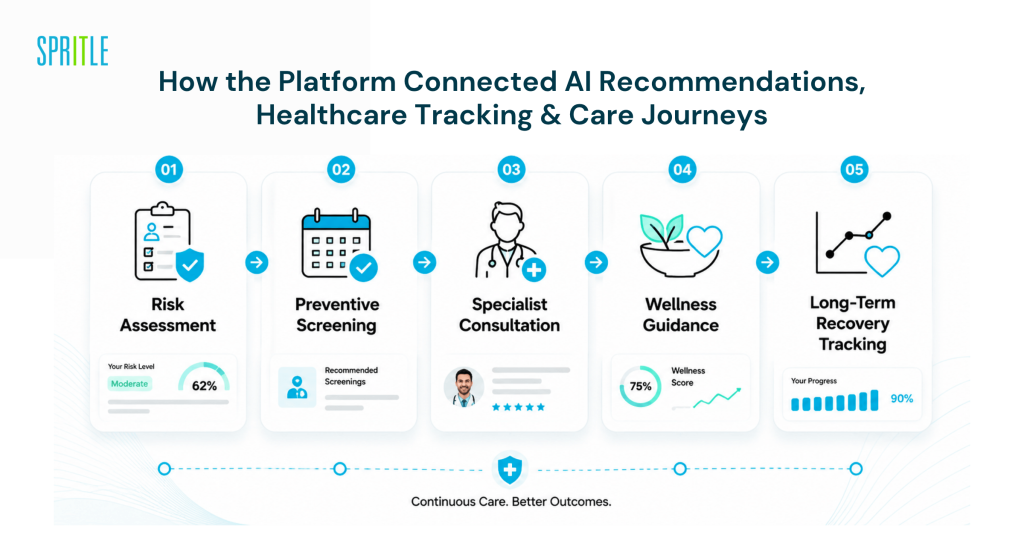
How the Platform Connects AI Recommendations, Healthcare Tracking and Care Journeys
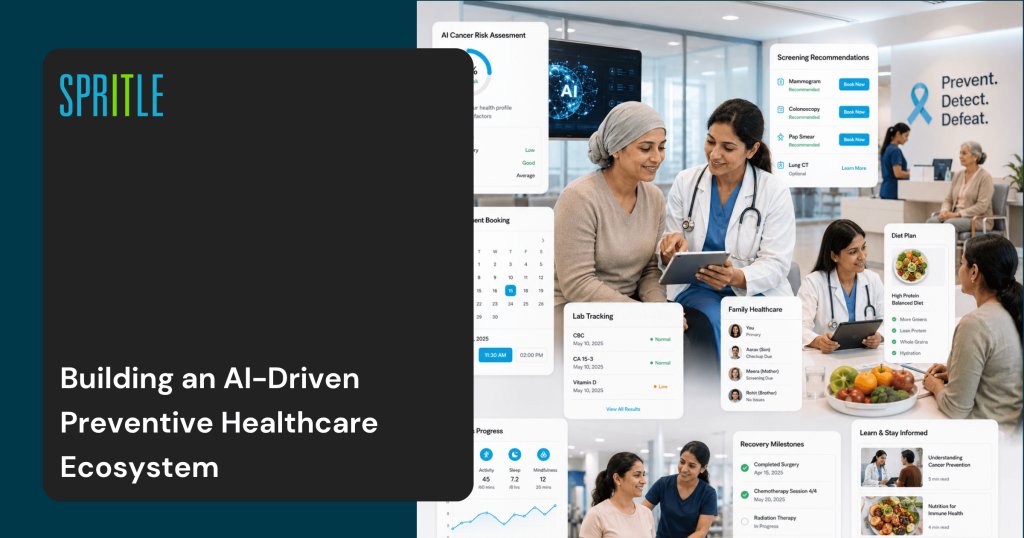
The AI layer was designed to continuously add and organize healthcare events as the patient progresses through the different stages of their journey. In many ways, the platform began to feel less like software and more like a personalized healthcare timeline. Users were no longer just viewing reports. They could see their health care story changing over time.
And honestly, that’s been one of the most important parts of the platform because it creates a sense of continued engagement for longer than a single healthcare interaction.
Another major capability built into the platform was AI-driven healthcare recommendations. Instead of forcing users to figure out the next steps themselves, the platform cleverly recommends: Preventive tests, lab tests, diagnostic tests, expert consultations, Health care follow-up programs and Wellness programs
The recommendation engine itself became incredibly complex because it needed to continuously evaluate the following factors,
- Age
- Gender
- Family health history
- Existing conditions
- A moral way of life
- Cancer risk indicators
- Test history
- User input
- Dependence on preventive care
And the compliments couldn’t feel more familiar. The platform needed to make users feel like healthcare guidance is tailored specifically for them. One thing that came naturally from this was the appointment booking workflow.
The healthcare journey was intentionally designed to stay connected from start to finish. If AI has identified a high risk or recommended additional care, users can quickly jump into a proactive workflow instead of manually searching for what to do next. The platform finally supported:
- Checks appointment booking, lab test booking
- Communication with specialists and MDs
- Sessions with psychiatrists
- Appointments with physical trainers
- Consultation with dietitians
- Sessions to protect good health
This was one of the strongest aspects of the experience because the system didn’t stop at recommendations, it helped users act on them quickly.
Another feature that stood out during the project was the ability to make customized AI food recommendations. This was not designed as a typical “diet plan generator”. The platform needs to intelligently recommend personalized nutrition and wellness guidance based on:
- Cancer status or stage
- A journey of healing
- Existing health conditions
- Food allergies
- Life habits
- Goals for wellness
And honestly, building this flow requires much deeper conversations than expected because health care nutrition is so sensitive and so personal. The goal was not just to provide users with food suggestions.
The goal was to make the platform feel supportive of the difficult health care journey where diet, recovery, allergies, and side effects of treatment all come together.
Building a Healthcare Ecosystem That Supports Patients Without Treatment
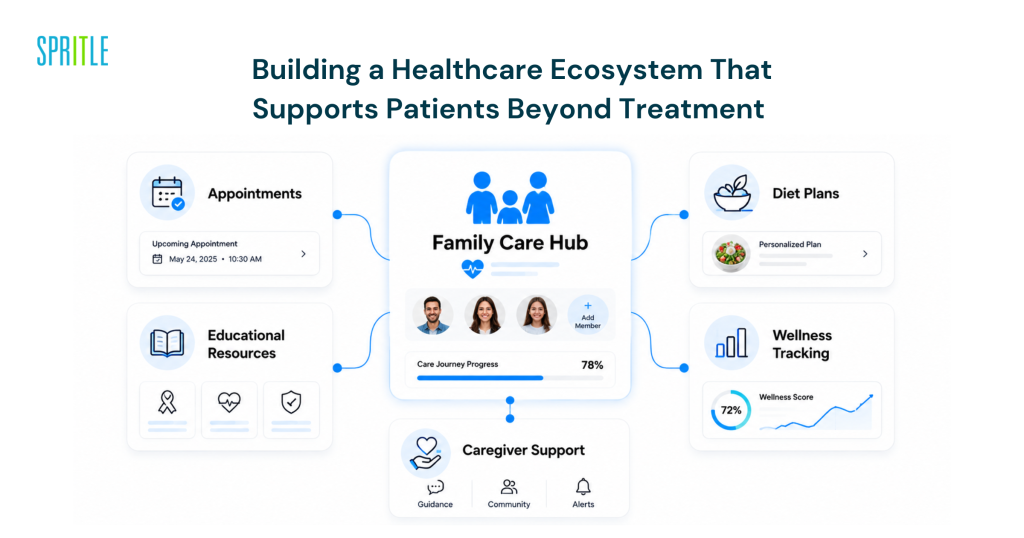
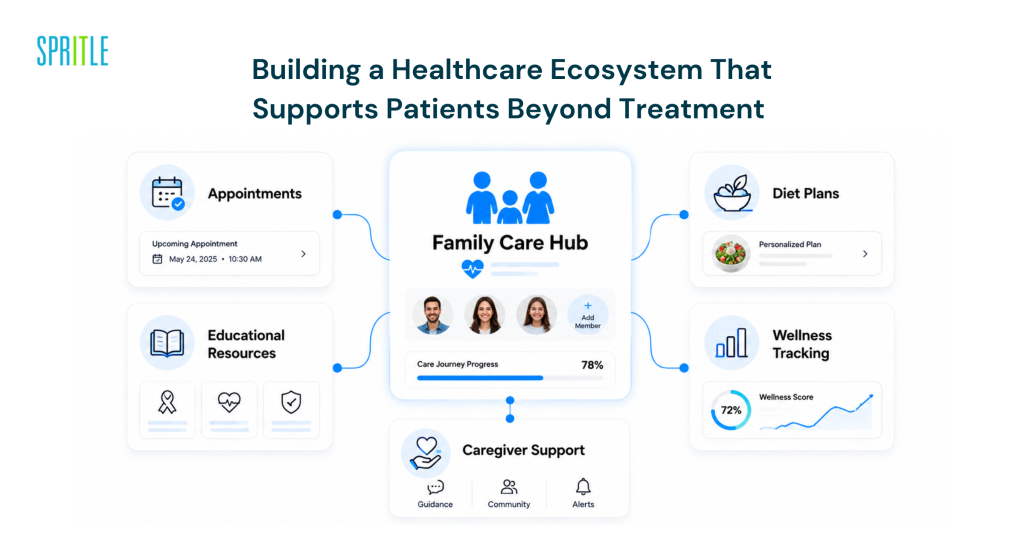
Another important layer added to the ecosystem was family healthcare management. At the beginning of the project, the client emphasized that the health care journey rarely involves just one person. Family members are often involved in planning, care decisions, health monitoring, and emotional support. As a result, the platform supports:
- Family account management
- Dependent health care profiles
- Changing of multiple profiles
- Shared health care tracking
- Booking appointments for family members
- Managing the health care journey together
- The visibility of family-based health care
- Shared notifications and reminders
And frankly, this introduced an entirely different level of workflow complexity because consents, recommendations, reports, and health care histories all needed to remain separate while still working within the connected family ecosystem.
One of the features that added a more human element to the platform was the education and awareness center. At one point during the discussion, a client said something that stuck with the entire team: “Preventive health care starts with awareness.” That idea eventually evolved into a dedicated education section where users can:
- Learn about the different types of cancer
- Understand the signs and warning signs
- Check the health care guide
- Read good health and lifestyle content
- Access health care services
- Read on from patient stories and survivor journeys
The patient’s stories changed especially the emotional tone of the speaker. Without them, the system runs the risk of feeling overworked and AI-driven. But adding in real healthcare journeys, survival experiences, and educational content gives the platform a more personal and supportive feel.
Users were no longer just using reports and recommendations.
They were learning, connecting, and understanding health care from real experiences.
Behind all these user-facing experiences, there was also an entire operating ecosystem being built. The project included:
- Admin sites
- MD sites
- Nursing sites
- Appointment management systems
- Workflow for security protection
- Healthcare reporting dashboards
- AI-assisted recommendation systems
- Employee review workflow
- Tracking management systems
Each site had completely different responsibilities and workflows.
For example:
- Administrators manage performance settings, membership, workflow, and user management
- MDs review tests, consultations, reports, and health care plans
- Nurses manage evaluations, coordinate preventive care, and follow-up management
And because the healthcare workflow was constantly evolving during the project, the system design had to be scalable and scalable from the start.
Conclusion : Building More Than Just a Healthcare Platform
Looking back, one of the biggest realizations during this project was the understanding that building a healthcare platform is not necessarily about building isolated features.
The real challenge is to design an ecosystem where AI assessment, health guidance, testing, appointments, family health care, education, healthcare providers, the long-term medical journey, and the patient’s emotional experience all work together naturally within one connected platform.
What began as an AI cancer risk assessment idea eventually evolved into a comprehensive AI-powered preventive health system focused not only on risk identification, but on proactively guiding, educating, supporting and engaging users throughout their healthcare journey.