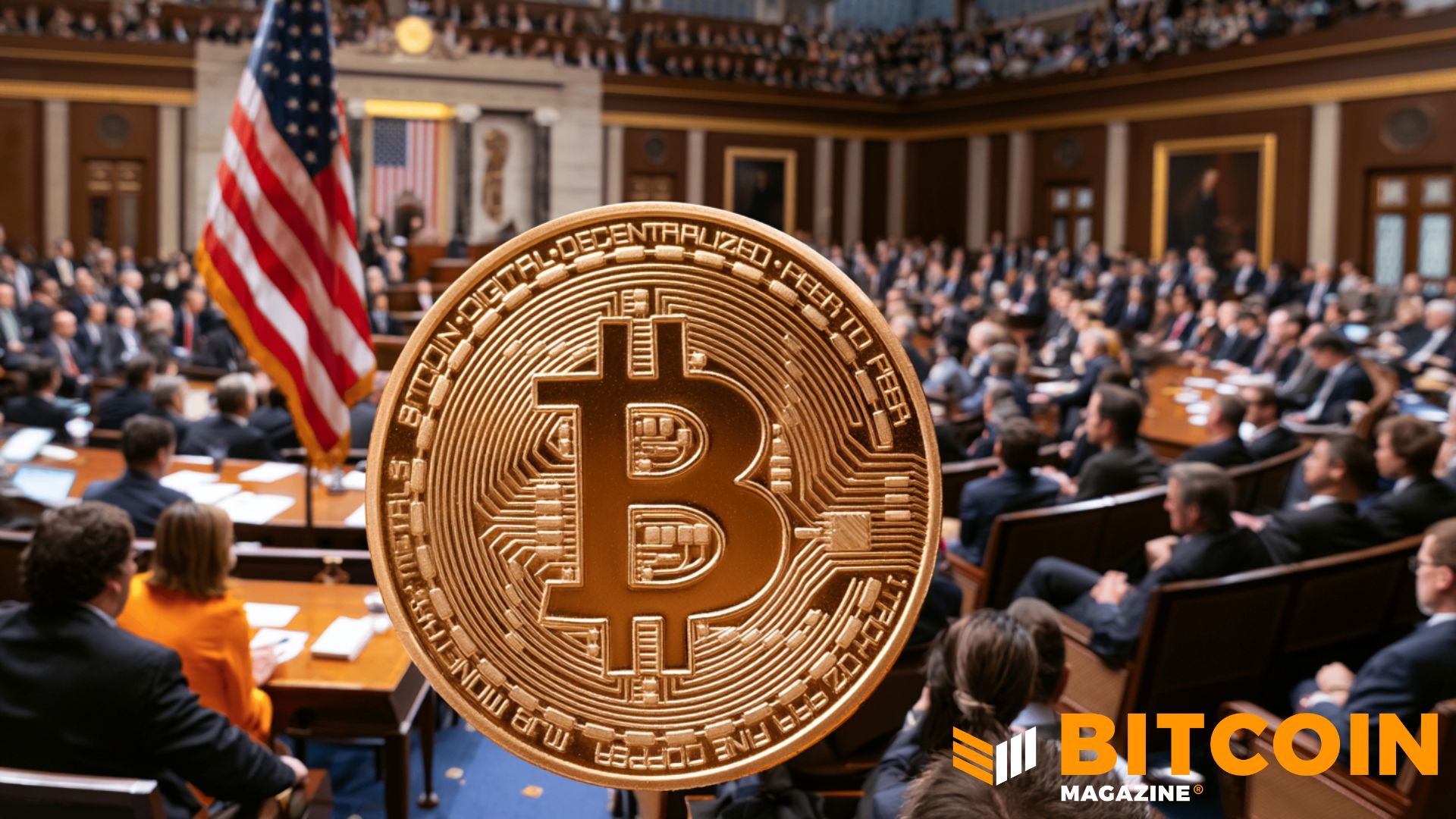
The Senate Banking Committee advanced the Digital Asset Market Transparency Act by a 15-9 vote Thursday, with Sens. Ruben Gallego (D-Ariz.) and Angela Alsobrooks (D-Md.) joined all 13 Republicans to submit a comprehensive crypto market structure bill to the Senate.
The Clarity Act is a bid by the Senate to create a government framework for trading digital assets, stablecoins and intermediaries, separating oversight between the SEC and CFTC and setting registration, disclosure and compliance rules for exchanges, dealers and custodians. It now moves forward with a related bill in the Senate Agriculture Committee, with the two texts expected to meet before a floor vote.
Chairman Tim Scott (R-SC) marked the change after years in which crypto firms operated in what he called a “regulatory gray area” under “outdated rules.”
He said the bill aims to protect consumers, keep things new in the United States and “close the doors criminals, terrorists and hostile governments have tried to exploit,” after months of separate negotiations that expanded the draft by more than 200 pages.
Sen. Cynthia Lummis (R‑Wyo.), who heads the committee’s digital assets panel, called the Clarity Act “the toughest piece of legislation” she has worked on in decades in state and federal office. He described it as a “premium story” that tries to integrate new types of hardware and software into control code built for earlier markets.
Warren’s camp: “industry-written” and “not ready”
Rep. Elizabeth Warren (D-Mass.) led the opposition, arguing that the committee should focus on retail, health care costs and credit card rates, not “a bill written by the crypto industry for the crypto industry.”
Warren warned that the draft “punches a hole” in securities law that has protected investors since 1929, follows state anti-fraud laws and allows banks to load volatile crypto exposure in ways linked to pre-2008 practices.
He said the bill “declares an open era of defrauding American consumers who use crypto,” and accused Republicans of developing a framework that helps “crypto grift the President of the United States.
Sen. Raphael Warnock (D-Ga.) linked his no vote to ethics, calling President Donald Trump’s digital asset business ties “pure corruption” and accusing Republicans of rejecting mandatory conflict-of-interest rules for all elected officials, including the president and vice president.
Cryptocurrencies, hybrids and stablecoins
National security concerns inspired a series of Democratic amendments that Republicans rejected by an 11-13 vote. Warren proposed stronger punitive tools against crypto mixers and DeFi services, citing the Treasury’s 2022 Tornado Cash designation and warning that the bill does not legally distinguish them.
Sen. John Kennedy (R-La.) pressed him on why the new anti-money laundering provisions did not include those services, and he joined Republicans to defeat the proposal.
Sen. Jack Reed (D-RI) described how Iranian actors are using the coins to buy drone parts, import sensitive goods and collect tolls on tankers in the Strait of Hormuz. He said the Treasury still had to “go with the hat” to issuers like Tether for voluntary cooperation, and called for clear powers for regulators to block illicit stablecoin flows abroad; his amendment failed to split the same party line.
Sen. Chris Van Hollen (D-Md.) pointed to estimates that more than $150 billion in digital assets flowed through wallets linked to illegal activity last year and highlighted a major North Korean exchange hack in which DeFi services helped launder money.
His proposal to make it illegal to waive the DeFi protocol for the stated purpose of enabling money laundering, sanctions evasion or terrorist financing also fell by an 11-13 vote, after Republicans argued that existing criminal laws already reach that behavior.
Republicans, led by Lummis and Sen. Bernie Moreno (R-Ohio), responded that Titles II and III of the bill already bind digital asset brokers to the Bank Secrecy Act, expand the Treasury’s “special measures” authority and bring kiosks, brokers and exchanges to clearer federal guidance than the House version.
President Trump, Global Freedom and the failed ethics amendment
The ethics provisions linked to Trump’s business relationship with World Liberty Financial and other crypto ventures have generated very sharp exchanges. Van Hollen offered an amendment to prevent the president, vice president and members of Congress from making business-to-business connections to crypto firms and demand more disclosure, saying it was necessary because “the president and members of his family” have been involved in “corrupt crypto practices and various crypto scams.”
Moreno said the measure is in the Judiciary Committee because it handles criminal penalties and protects Trump as a “good man,” accusing Van Hollen of publicizing criminal behavior without a court record. The amendment failed 11–13.
Warren tried to force banking regulators to release secret surveillance records related to Jeffrey Epstein, arguing that Epstein had supported early crypto investments and that the exam files could reveal what banks and executives knew as they moved funds through major institutions. Lummis countered that secretive equipment was outside the scope of the market structure bill, and that amendment failed again, even after Kennedy said he would have supported it without the “other” language.
DeFi safe harbor deal exposes Democratic Alliance divide
One of the resulting votes came on Lummis Amendment 122, a technology package negotiated by Sen. Mark Warner (D-Va.) refined when the DeFi protocol is counted as controlled by a small group and communicates the safe harbors that are the basis of the bill.
Warren said the amendment embeds a “minimum test” where businesses count as crypto intermediaries and introduces a Section 604 “loophole” that shields decentralized services from basic anti-money laundering laws, saying “it doesn’t matter if you have laws if nobody has to follow them.”
After a brief technical correction to strike two lines, the committee accepted the amendment 18-6, with Warner, Cortez Masto and Alsobrooks joining the Republicans. That vote marked a clear division: Warren, Reed and Van Hollen opposed consensus, while the “crypto Democrat” bloc accepted the DeFi framework as a basis for refinement before floor action.
The process of fighting over which amendments are valid
The marks also turned into a test of Scott’s control over the draft. Prior to the trial, he ruled that more than a dozen motions were illegal regarding the grounds for filing and filing, including an amendment supported by the National Sheriffs Association from Sen. Catherine Cortez Masto (D-Nev.) on the maintenance of a legal platform and a community-based stablecoin – the harvest of D. Sen.
Later, seeking a bipartisan result, Scott returned several amendments, including Lummis 122, after Democrats like Warner and Gallego said committee votes on that compromise would make support easier. Warren argued that he was revitalizing part of the Republican-leaning language while leaving lawmakers and community banking proposals on the sidelines.
Van Hollen noted that some of his well-drafted amendments never reached a vote, as the previously rejected Lummis text passed 18–6.
Scott responded that he and Warren had agreed on amendments to each side, and that to that end he was using discretion to work for Democrats who wanted a bipartisan outcome.
Gallego and Alsobrooks give the Clarity Act its bipartisan backbone
Throughout the day, Republicans adopted targeted reforms supported by industry and administration, including Sen. Mike Rounds’ AI sandbox and portfolio margin language for Sen. Dave McCormick, both of which were adopted with the support of the Democratic Alliance. They have rejected all attempts by the Democrats to extend the sanctions tools, bail out the barley, strengthen the DeFi debt or write ethics rules into the bill.
By the last vote, the Democratic side had split into clear camps. Warren, Warnock, Van Hollen, Smith and Reed have built a record that presents Clarity as an industry-driven structure that weakens enforcement and leaves the president’s conflicts untouched. Warner helped shape the key language but retained the power of the later stages.
Gallego and Alsobrooks provided the deciding Democratic votes that turned the joint project into a 15-9 bipartisan committee win, while both indicated that floor support will depend on continued ethics and law enforcement as the bill moves toward consolidation with the Agriculture Committee version and a 60-vote test before the full Senate.