Intensive cvMax training walks a fine line between being effective and causing damage

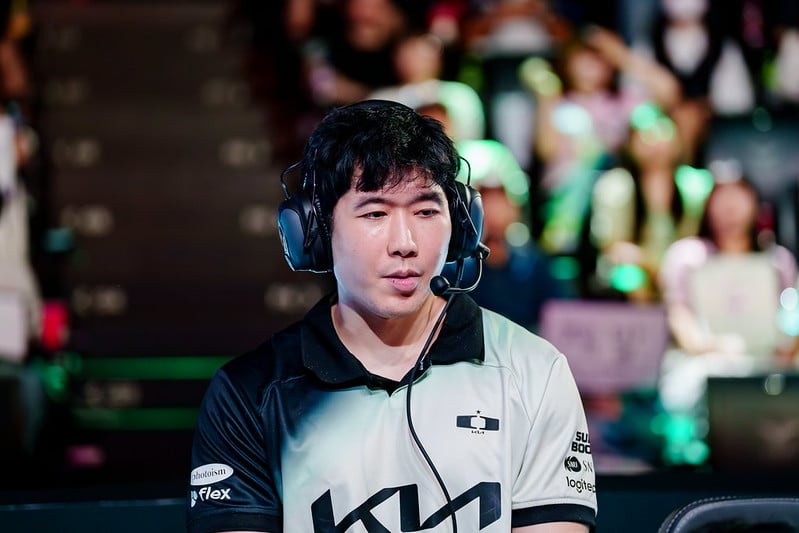
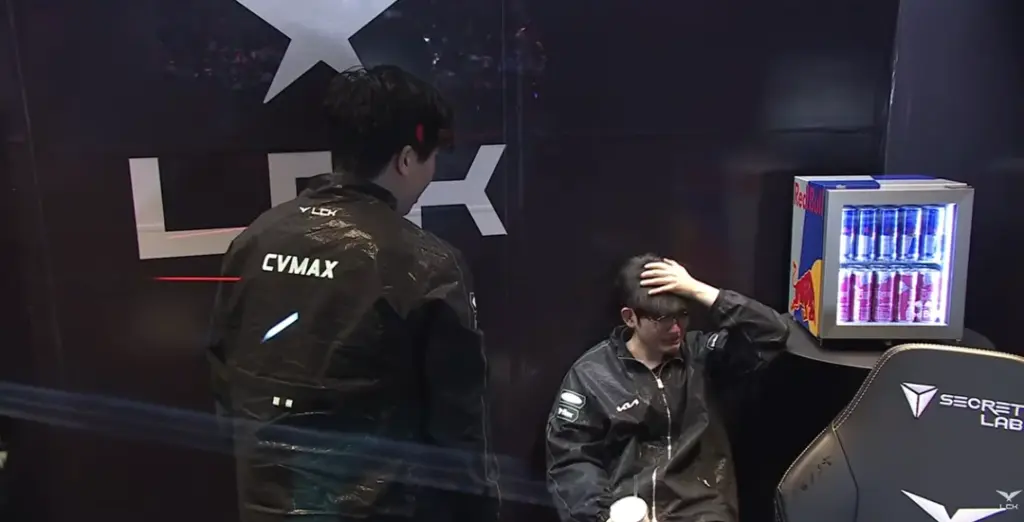
Where the Dplus KIA behind the scenes photo of the master coach Kim “cvMax” Dae-ho review of his side’s 2-0 loss to KT Rolster began to circulate, with much of the initial reaction centered around discomfort.
But although most members of the community criticize the methods and behavior of the head coach, it should be considered that they have a really positive influence and lead to long-term improvement.
If harsh words create clarity, accountability, and urgency, they can be part of a successful environment. If they leave the player feeling humiliated, the same approach can backfire.
- It’s too early to call Keria the second best League of Legends player of all time
- Controversial but promising: Nongshim RedForce needs Diable to be the top team in the LCK
cvMax calls Siwoo
In Jeon “Siwoo” Si-woo‘s case, that line is especially it is important. The coach called the star player, “next-level bad” and called him “the genius to make the team lose the game.”
Several members of the community called this action offensive: “Surprisingly no one, cvMax is doing it again,” said a user on X.
This is not the first time cvMax has been so aggressive towards his players. Back at Griffin, players Choi “Sword” Sung-won, Lee “Tarzan” Seung-yong and Shin “Rather” Hyeong-seop all said they were subjected to or witnessed verbal or physical abuse by the head coach.
While it cannot be denied that physical abuse should be punished, verbal abuse is a very serious expression in a competitive environment, especially after a loss, when emotions are still high.
A strong response is part of elite competition
In a game like League of Legends, execution is key. With so many small nuances and details, players need to play near-perfectly to maximize their chances of winning, and every single mistake can be fatal.
This is where the responsibility and importance of the coach comes into play: admitting mistakes and correcting them is what makes great players into great teams.
If the top lane mishandles the wave or if the bot lane loses importance at a critical moment, the players should know exactly what is wrong, why it happened, and what should change before the next game. In that sense, having a direct coach is not only acceptable, but essential.
This is especially true in the LCK, which is considered the most competitive league in the world, where the standards are brutal. Also, Dplus Kia is a team with high expectations, as they have gathered talented youngsters in the scene, led by former world champion Heo “ShowMaker” Su.
In that area, heated discussions are not a sign of dysfunction. On the contrary.
The problem is not the attitude; it’s a name
This is where the cvMax debate gets really complicated. The issue is not just that he sounded angry or that the players have to answer for themselves, especially after a bad performance. Emotions will not always be polished, and it is not easy to keep them strong.
But the main concern is the words. The way a coach communicates with his players can make a big difference in how the other side takes the message.
There is a big difference between telling a player how he should have played the game and telling him that is the reason why the team lost. The first statement shows the problem. The second is to attack the player himself.
And even though CVMax identifies certain aspects of gameplay for players to improve, the problem is that the player still receives a demeaning message that can seriously damage their confidence.
Telling a player that they are a problem in such a way can be very difficult to process, and takes attention away from making corrections. This is where intense training can stop being productive.
One user on Reddit wrote: “I totally disagree with cvMax’s approach, and I don’t think this kind of brutal treatment should be normalized or tolerated just because fans are frustrated. There’s a difference between holding players accountable and creating an environment designed for humiliation or extreme pressure.”
This does not mean that coaches need to soften every sentence. Advanced players should not expect every mistake to be covered in comforting language. But words still have to lead nowhere.
Movistar KOI League of Legends coach Tomás “Melzhet” Campelos Fernández is known for his harsh words, especially this year, when the team’s expectations are high.
In the post-game interview, Melzhet said that top player Alex “Myrwn” Pastor Villarejo and ADC David “Supa” Martínez García did not deserve to be renewed based on recent performances. Despite the seemingly negative words, the MKOI coach is always direct in his responses and often looks at his players, praising them at the right times.
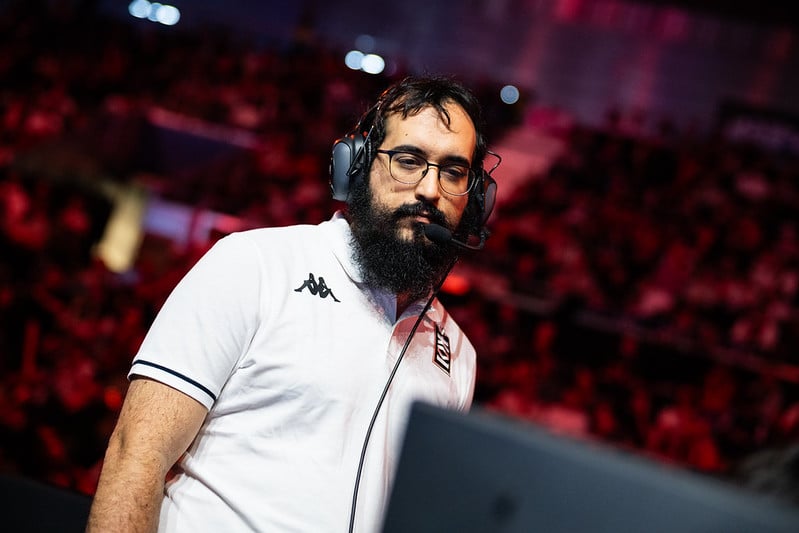
MKOI supports Álvaro “Alvaro” Amo who has also been criticized by his coach, however this player showed great respect to his leader.
“I’d rather he be like this than most NPC coaches,” he said earlier in the interview. “He is interested in what we do, and he really wants us to improve because he has seen the strength and how good we are at other times.”
A strong coach can be harsh but must choose his words wisely. If the head coach is frustrated, he should also be aware of how his emotions can affect his words, and therefore the team.
Different players feel criticism differently
Another important part of the debate is that not all players react the same way to criticism.
Some players thrive when challenged directly. They are happy to answer when they argue and can use those moments as fuel to get better.
But not everyone does, especially when it comes to League of Legends players. Back in 2021, the owner of LCS team TeamSoloMid (TSM), Andy Dinh, was accused of using an aggressive and harsh tone towards his players and staff.
Although he was not a coach, Dinh was an organizational leader and was therefore responsible for setting a workplace culture that allowed such behavior to occur.
That year, the team faced a lot of pressure, having just signed Worlds 2020 runner-up Hu “SwordArT” Shuo-chieh for $6 million and the expectation of competing internationally. Despite being one of the top teams in both of these regular divisions, TSM ultimately failed to win the year-end world championship, marking a disastrous season for the investment.
This is why the discussion should not be framed as to whether the cvMax method is right or wrong in absolute terms. A better question is whether you really see how each player will receive their message.
The same review style and response can have completely different results depending on who is on the receiving end.
The best coaches are adaptable
cvMax has long been recognized as one of the strongest League of Legends trainers. He was able to nurture and develop world-class players, especially during his time at Griffin, with a perfectionist mindset and exceptional level of demand.
But great coaches know how to read a room. They not only point out mistakes but also turn them into improvements. And if using harsh words and belittling players has the opposite effect, then it is not beneficial and should be stopped.
This is where communication is important. Emotional intelligence to choose the right words and communicate constructively. In Siwoo’s case, the concern is not that cvMax criticized the player, but the concern that the young player may have negative effects on his confidence. In a game like League of Legends, where it’s tied directly to a player’s kill, it can break him.
cvMax walks a very fine line. If he wants to get the best out of his team, he needs to show that his methods can improve without losing the qualities that got the players to this point in the first place.
The post cvMax’s intense training walks the fine line between being effective and boring appeared first on Esports Insider.