Pragmata’s Tender To Be A Father Made Me Want To Be A Father To A Girl

Your mid-20s are undoubtedly one of the most confusing times in your life; you learn to be independent, you discover the truth of the world, of the people around you, and most importantly, you think about how to settle for the future. However, as much as it may sound like an existential crisis to navigate this arc in your lonely arc, video games can sometimes keep those powerful waves of reality at bay, and maybe teach you something new about yourself along the way.
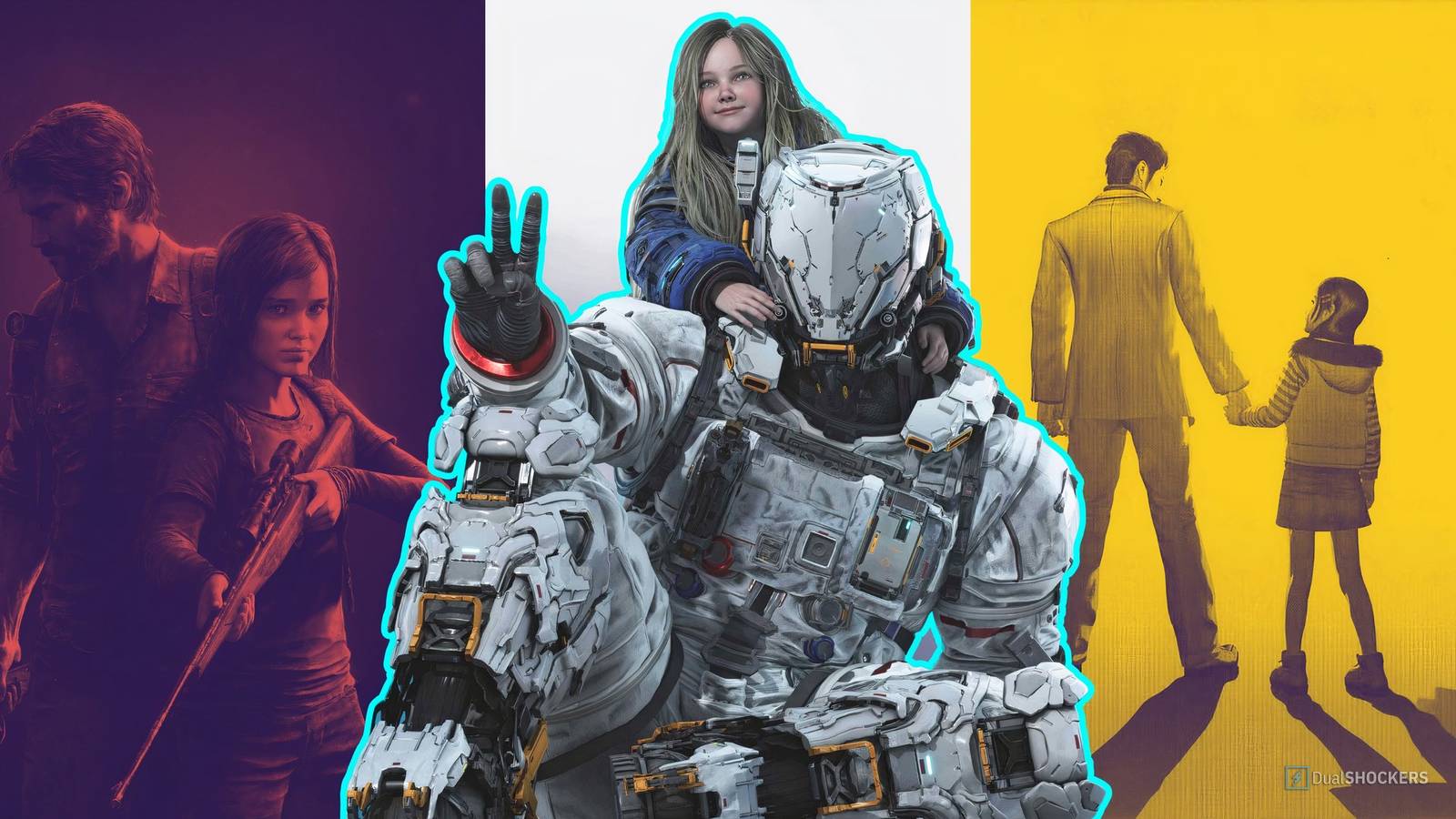
For example, Capcom’s recently released Pragmata cemented my never-ending dream of becoming a father to a girl. And no, this wasn’t just a recent bias; a few of my IRL experiences and some media exposure contributed to that feeling in me from my youth. And then Pragmata ended up closing all that to a tee in the form of Hugh and Diana’s sweet and touching bond throughout the game.
But how well is Capcom doing this? Again, this father-daughter ideal is not the same everywhere in the world, so this warrants a comparative exchange between Western and Eastern shows of the father-daughter/son duo trope. Well, stick around, because this one’s for anyone else who feels like a parent after rolling the credits to Pragmata.
The Parent-Child Archetype in Video Games in Two Cultures
The parental relationship angle is a rare but touching theme in video games when delivered with the right thought. Of course, ideas are important in this context, and both Western and Eastern countries (especially Japan) have different ways of showing this theme in their games, whether it be through conflict practices or just pure nurturing direction.
From Kratos and Atreus, Geralt and Ciri, and Joel and Ellie, many of these two often portray the figure of a parent as a person who is flawed, but who also sincerely tries to harden their child so that they do not fall into the same dark ways as them, or just to be ready to fight their cruel worldly nature.
Furthermore, the most profound and striking difference here is that one focuses on Fatherhood as an act of letting go, while the other focuses on Fatherhood as ownership. You’ll know which one it is once you’ve both played it, but the point is that a character like Geralt doesn’t just turn off his relationship and actually ends up rewarding the player with a sense of emotional maturity by letting Ciri make her own choices, even if it’s dangerous.
And in The Last of Us, Joel goes in almost the complete opposite direction. He is a sad man who begins to isolate himself from the monotone, like Geralt. But this time, when Joel gets hitched to Ellie, it all boils down. In the end, Joel doesn’t just protect her—he chooses her for the rest of the world. And most importantly, you make that important choice for he, not with his. It’s meant to be morally corrupt, and something that’s poetic about the devastating, amber writing style of both The Last of Us games.
Now compare that to characters like Barret Wallace from Final Fantasy VII, or Kazuma Kiryu from the Yakuza series. Here, fatherhood relies heavily on safety and quiet sacrifices.
These characters know that the world is harsh, but instead of preparing the child to face it head on, they try to delay that exposure as long as possible. Kiryu runs an orphanage while he’s stuck in the Yakuza underworld, and Barret pampers Marlene; it’s about maintaining innocence.
The parental relationship angle is a rare but touching theme in video games when delivered with the right thought.
Despite having an important narrative to each game, it’s incredibly interesting to me how both cultures support fatherhood in a dignified way and show their responsibility for killing each other. One hardens the child against the world by exposing him to it, while the other softens the harsh influence of the world by standing between him and the child.

10 Games You Must Play If You Like Citizen Evil
If you’ve just played Resident Evil Requiem and are looking for games to give you the same experience, we’ve got you covered.
While I’m not a veteran Capcom fan who has lived to tell the tale from their heyday during their time in the trenches, I can still confidently say that they’ve been on a roll this year. But most importantly, lightning struck twice in the way Capcom replicated something familiar between Resident Evil Requiem and Pragmata.
In Pragmata, the bond between Hugh and Diana hinges on an almost emergent parentage. Hugh is not cut out to be a father, and Diana is no ordinary child, yet their relationship grows into something deeply protective. What’s interesting is how Diana often carries a quiet, almost maternal awareness as she guides, reassures, and playfully learns about earthly life with Hugh.
Meanwhile, RE9 approaches this idea with a more focused but unusual take on Grace and Emily. Here, the mother’s instincts are more apparent, especially when Grace becomes the quiet but empathetic caretaker you wouldn’t expect in a bleak and terrifying setting. But Emily is not just a passive recipient of that care. Like Diana, trusting back, emotional reinforcement, and moments of vulnerability become Grace’s strength.
The main difference is where and how, because Capcom didn’t just “do it twice.” You can clearly see that both plays explore the same emotional core of protection, care, and bonding as parents, but expand it in two ways: in Pragmata, care is learned and built upon in the same way as Hugh and Diana try to escape to Earth. On the other side of the coin, in Resident Evil Requiem, care is natural and active, the most powerful to meet the character of a scary cat like Grace, who represents little by little the indomitable human spirit against all terrible odds.
Pragmata’s “Girl Daddy” Doesn’t Speak Out Loud, and That’s Better
At first, Hugh (understandably) treats Diana like a mission target. Cautious, a little distant, working on instinct rather than attachment. But the first real change comes in those early parts of Pragmata, when Diana begins to guide him instead.
Using machines, you are the one who hacks enemies, opens paths between obstacles and corridors, and is the MVP in your survival. That reliance on gameplay indirectly reframes their relationship: Hugh isn’t just a caretaker; he is the person you need. That is the first crack at the strict father archetype.
And then you get the little, humanizing bits that you just know Japanese engineers love to dazzle audiences with: Diana’s curiosity, her childlike questions, the way she reacts to the world with wonder instead of fear.
Unlike the typical fathers represented in the mainstream Western media, Hugh does not teach at all. Instead, you can hear him revitalizing in real time when he talks to Diana at the Shelter or during the screening, choosing reassurance over facts, comfort over status quo. It is not to prepare the world for him; it’s about preserving who you are as long as possible.

One of the most poignant things comes from the way he starts looking at her more often, the way his tone changes from direction to protection, almost gentle. And when he finally expresses his urgency instead of escaping, it becomes more difficult because the game clearly wasn’t shouting about it during the first half of the gameplay.
In Pragmata, the bond between Hugh and Diana hinges on an almost emergent parentage.
A game like Pragmata evokes a tender, confident desire to raise a daughter, while also giving you a glimpse of what it can feel like.
By all means, it is not a vivid depiction of the struggles you will endure in real life as a father, but I firmly believe that the story of Hugh and Diana’s space father will at least make you care enough to understand the hardships, challenges, and symbolic sacrifices that come with the journey of raising a family.

Pragmata Review
No one in space can hear my father making a joke.

Pragmata

8.5/10
- Released
-
April 17, 2026
- The ESRB
-
Youth / Language, Violence, In-Game Shopping