Stranger Than Heaven Combines History, Horror Action and RGG’s Signature Style of Finesse

It’s that time of year again, when I look forward to the next game of the year from RGG Studios, because what other video game has protagonists with their backs painted by dragons and ends up with stories that resonate with audiences?
But this time, the playing field has been changed. As someone who has invested a lot of time in this series, from getting a 100 percent awesome list made for Yakuza 0’s Platinum Trophy to falling in love multiple times with Ichiban in my first memorable playthrough of Yakuza 7-a very personal game that literally saved me from one of the worst moments of my life.
Like a Dragon: The Pirate Yakuza Comes to Hawaii Review
Raise those sails, we’re going on a merry-go-round with Scurvy Mad Dog himself.
Now it was time for Stranger Than Heaven, a game that, from all the revelations and in-depth details, looked like the next ambitious title from RGG Studios after Infinite Wealth. Understandably, many like-minded people should be carefully tuned, because we all know what the track record was after Pirate Yakuza and the controversial cesspool that was Yakuza Kiwami 3.
I’m here to put some of these valid concerns to rest because RGG Studios is doing something with Stranger Than Heaven. This is not a Yakuza game meant to establish the origins of the Tojo Clan; it’s the studio’s boldest and most stylish game yet, and boy, does it sink its teeth under that glitz, with Makoto Daito’s split-time mystery narrative leading the way.
A Historic Setting Rich in Possibilities

In today’s times, few studios impress me with their trademark qualities, but since I first laid my eyes and hands on Yakuza 0, RGG has been that developer I know that always delivers with its setting and presentation.
Whether it’s the crime-ridden streets of Kamurocho, the small heartfelt stories hidden under the series’ entire series of nonsensical optional content and mini-games, or the characters who somehow balance brutal violence with real humanity, these guys have carved out a unique identity over the years. And that’s despite the fact that the series’ creator, Toshihiro Nagoshi, is no longer at the steering wheel.
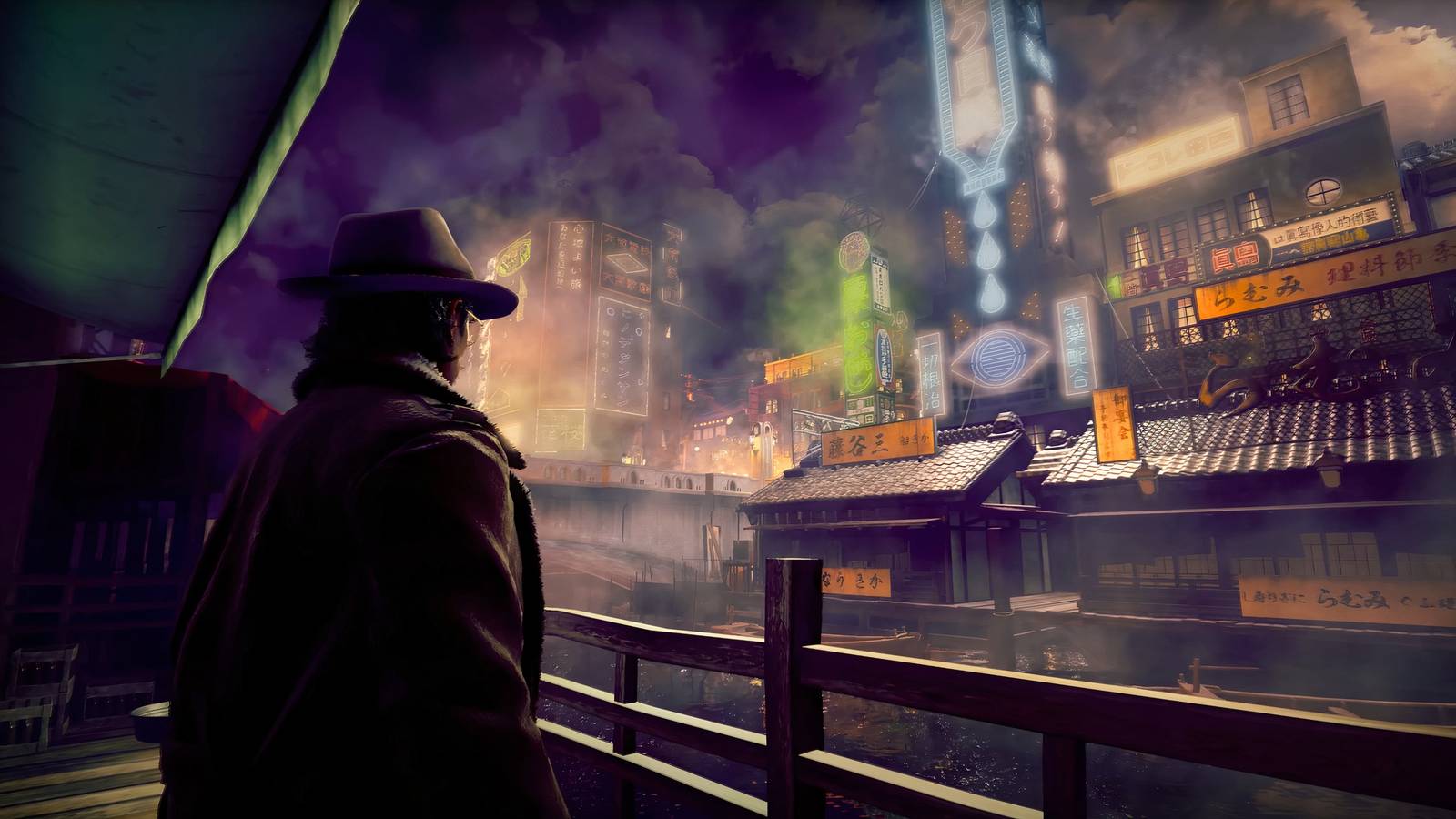
Stranger Than Heaven, however, feels like the studio is (finally) stepping far outside of its comfort zone, and it’s already shaping up to be one of RGG’s most interesting projects, judging by the titles. The 20th century settings of Fukuoka, Hiroshima and Osaka all create a completely different atmosphere to this; exchanging neon lights and modernism for dusty streets, jazz-filled spaces and a world caught between industrial progress and social uncertainty among people.
Now it was time for Stranger Than Heaven, a game that, from all the revelations and in-depth details, looked like the next ambitious title from RGG Studios after Infinite Wealth.
Each city has a unique vibe and element of the world that makes each timeline feel special to explore. The bustling but poverty-stricken neighborhood of Kokura in Fukuoka comes to life as you enter Makoto’s long-time friend, Yu Shinjo, and that continues when you shift gears later to Osaka in 1943, where you can see how foreign and western culture has influenced Japan’s entertainment districts amid the Mafialy and Yakuza conflict.
RGG kept most of the story details under wraps, but there was plenty of subtlety in how identity and evolution were teased out. Especially when you include Daito’s investigation in recent times, it has an eerie, almost supernatural undertone that really sets the stage for what’s to come as he rises to become a ruthless and scheming figure in the heart of Japan.
Yakuza Kiwami 3 & Dark Ties Review
While making the third installment accessible to many casual fans, Kiwami 3 (unfortunately) doesn’t honor the original’s legacy enough.
Bargaining with a Ruthless Edge

In a previous feature piece I worked on, I explained how STH’s combat was the biggest shakeup RGG could muster since the days of chugging Staminan Royales like Kiryu in his games or throwing goons with the power of reaction-based JRPG friendships like Ichiban. And now I can safely say that this is probably the most mechanically placed combat you’ve heard in RGG’s brawler lineup of games.
Lost Judgment was the pinnacle of what they could achieve in that department, as you had access to four different fighting styles and a combat base that allowed you to easily judge enemies with input or animation loops.
And now, Stranger Than Heaven really feels like an evolution of that premise. Battles are still as cinematic and impactful as they were in the main Yakuza series, but now there’s a greater emphasis on automation in every single encounter. By that, I mean you’ll get your teeth kicked in the first few times, but I promise you, getting into the steep learning curve of mastering all four of Daito’s limbs along with the controller’s shoulder buttons is a satisfying experience.
And now I can safely say that this is probably the most mechanically placed combat you’ve heard in RGG’s brawler lineup of games.
As an enemy we can grab one of your arms to hold you back, but unlike only button-mashing your way out like you would with Kiryu, you can instead use your other open arm to yell at an incoming enemy or use it as a human ragdoll for a screaming one. Daito can also use objects and weapons seamlessly, turning almost any kind of mundane melee into a true survival action fisticuff.
Both are unpredictable and require you to constantly be aware of the area for attacks from enemies, or you will be attacked by a pack of dogs.
It goes without saying that until a full release changes things, though, the combat looks unpolished. And no, I don’t mean the presentation or anything, but the general flow is sad and sluggish to the point where finishing off some weapon-charged attack or trying to cross or escape an enemy-locked event can feel awkward or confusing. But don’t get it wrong: the physical impact of the overall battle is great, and I just hope they manage to fix things before the final build of the game because mercilessly delivering the haymaker with Makoto is absurd levels of fun.
The 10 best JRPGs of the 2000s
The new millennium was a time of great evolution for the JRPG genre.
Cities Full of Stories Worth Telling

While there wasn’t a lot of side content to check out on the silver platter yet, there was a little tease during the sample course: Makoto Daito’s audio sample and music show management system. You can build an entertainment empire by scouting players, collecting rumors, recruiting singers and musicians and organizing live shows with seasoned fans — you’re right to think of it as similar to the side businesses of Real Estate and Cabaret Club from previous RGG games, but obviously with a musical twist.
Besides, while I felt the absence of golden age arcade games found in SEGA’s overflowing cabinet, Stranger Than Heaven seems to rely on various gambling activities and mini-games, depending on the era and city, of course. An arm-wrestling game was featured, but other descriptive card and dice games, I’m interested in how they will evolve with each timeline change in Makoto’s life.

The strength in the side content department is there, as RGG is definitely not a a stranger in number five (see what I did there), given what we have seen in the past with the extremely ambitious design of Yakuza 5 and five different protagonists. Even with that game aside, Like a Dragon: Endless Treasures was a JRPG treasure trove of both quantity and quality, with no story in the least.
And speaking of, that’s honestly where a lot of my biggest concerns lie. This time, we get to see Makoto Daitoh’s saga unfold throughout the five seasons, but handling his character development closely to the story while not keeping anything dangling or loose by a thread seems risky. Also, many general audiences and fans alike are still reeling from the out-of-place inclusion of Tupac as one of the celebrity-like figures featured in this game. RGG loves celebrity cameos, but having a late, great, and legendary rapper featured here seems like a no-brainer, even if he has the family’s express approval.
Still, it’s not massively enough to keep me from the game, and I’ll be looking forward to what the full package of Makoto’s odyssey across Japan will be like once I hear it. But if they can finish off the fighting a bit and maybe check everything off the writer’s drawing board to create a timeless story, we might have a game that will put Ryu Ga Gotoku Studios back on the map for me as the masters of soap-opera crime drama in video games.
The 12 Best Yakuza Final Boss Fights, Counted Down
From sworn brothers to men with nothing to lose, here are the best final boss battles in the Yakuza series so far.

Stranger Than Heaven
- Released
-
January 15, 2027
- PC release date
-
January 15, 2027
- Xbox Series X|S release date
-
January 15, 2027
- PS5 release date
-
January 15, 2027