Trezor Academy Releases Documentary About Africa’s Bitcoin Economy, Opens Education Contributions

While Western financial sources spent most of 2026 tracking Bitcoin’s crash from its October 2025 high of around $126,000, Trezor Academy released a documentary that tells a different story.
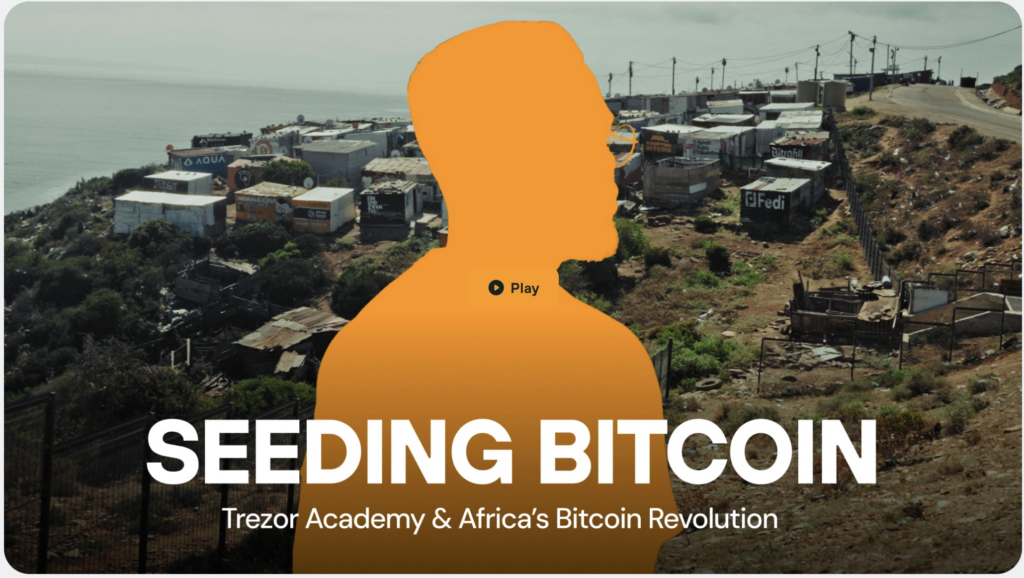
Seeding Bitcoin: Trezor Academy and Africa’s Bitcoin Revolution follows teachers, traders, and community members across Sub-Saharan Africa who use Bitcoin as a speculative asset but as an active financial instrument.
The film captures Bitcoin educational institutions in South Africa where young students complete Bitcoin diploma courses and receive weekly rewards in bitcoin, some of which are used to buy groceries for their families.
It describes a shopkeeper who refused Bitcoin due to volatility concerns until a local teacher introduced him to a stablecoin settlement, after which he became an adopter.
It documents a woman who traveled 14 hours to attend a grassroots Bitcoin conference and an ex-drug addict whose life changed from joining the local Bitcoin economy.
The line between them all is to be excluded from the existing financial system. Speakers in the film describe the number of people — refugees, orphans, people without legal addresses or government-issued identification — who do not have access to bank accounts, credit, or formal payment infrastructure.
Bitcoin, as one participant put it, “doesn’t care if you’re poor or rich, what your skin is like, whether you have a government ID or not.”
Chainalysis has recorded more than $205 billion in on-chain value achieved across Sub-Saharan Africa in the year to mid-2025, up nearly 52 percent year-on-year – the region’s third-fastest growth rate in the world.
A greater share of those transfers fell below $10,000 than any other state, a pattern consistent with daily individual spending rather than institutional flows.
The cost of remittances tells part of the story: sending $200 to Sub-Saharan Africa through conventional channels costs close to 9 percent, the highest rate of any region according to the World Bank.
On Bitcoin’s Lightning Network, an equivalent transfer can cost a few cents.
Financial instability adds another dimension. When the Nigerian naira was devalued in March 2025, the on-chain volume in the region increased as people withdrew money to save the local currency. In societies that have lived through multi-generational inflation, a fixed supply of goods without government control carries more practical appeal than ideology.
Trezor Academy: Global bitcoin education
Trezor Academy, which has held more than 300 meetings, graduated more than 2,000 students, and now operates in more than 30 countries, created a documentary around local teachers teaching their peers in their own languages.
“This program will not teach everyone in Africa about Bitcoin,” said one teacher in the film. “What we’re doing here is planting the seeds through local educators where the Bitcoin circular economy grows later.”
Alongside the release, Trezor has added a donation option to its online store. Customers can donate at checkout or donate without making a purchase, with all proceeds going towards workshops, meetings, and project funding in the Global South.