Democrats Sanders and Warren Push Labor Department to Drop Bitcoin 401(k) Rule

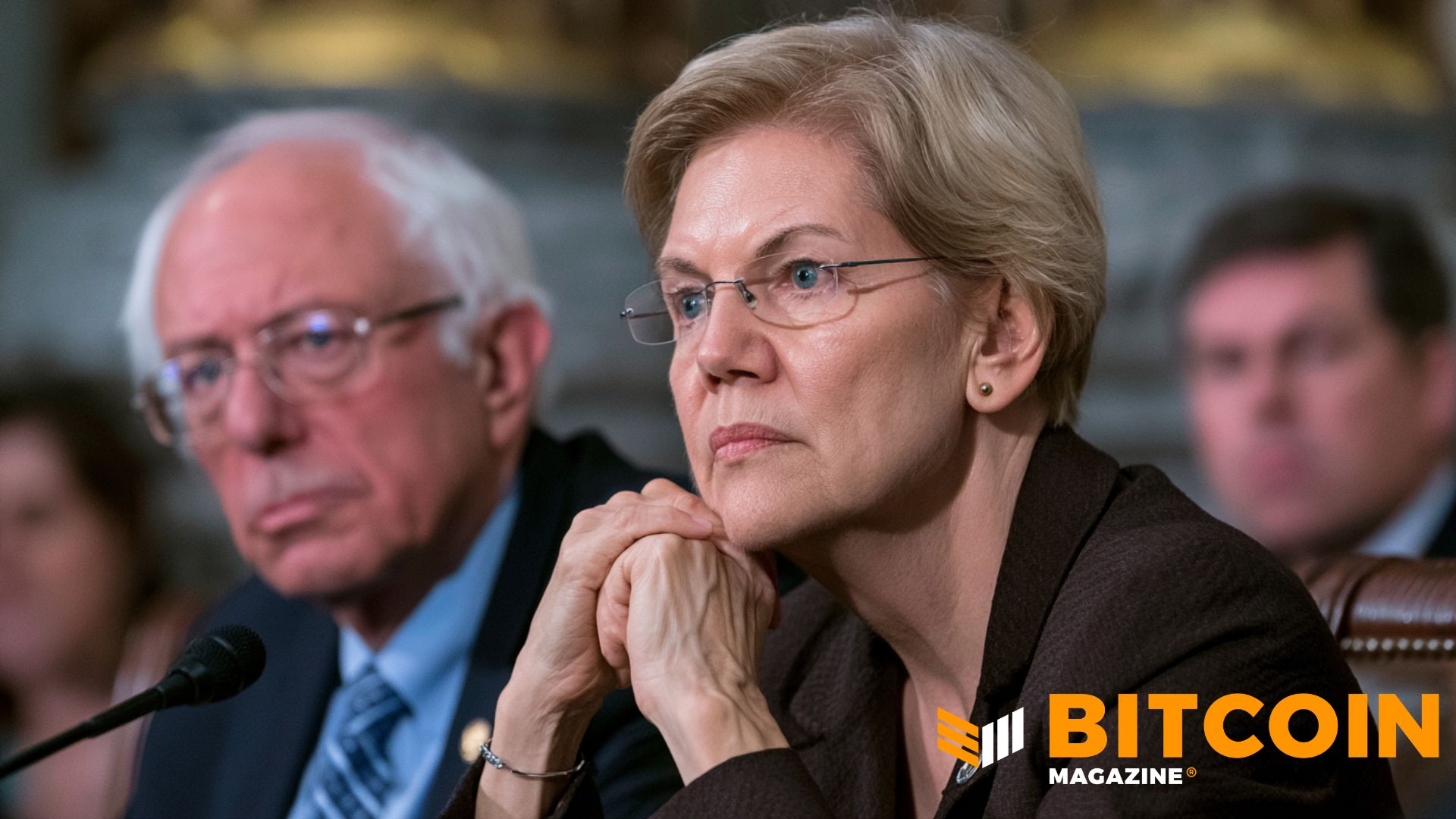
Majors Bernie Sanders and Elizabeth Warren are calling on the Trump administration’s Labor Department to overturn a law that would open American retirement savings accounts to Bitcoin and other cryptocurrencies — a move lawmakers say puts the financial future of workers at risk while lining the pockets of President Trump and his family.
In a 14-page letter sent Monday to Acting Labor Secretary Keith Sonderling, Sanders (VT) and Warren (D-MA) joined ranking member of the House Education and Workforce Committee Rep. Bobby Scott (D-VA) to criticize the Labor Department’s proposed legislation that was floated in March.
The law would give 401(k) plan fiduciaries cover to offer volatile assets — including cryptocurrencies, private equity, and private credit — as long as the fiduciaries can demonstrate they weighed important factors before granting access.
“This proposed legislation is dangerous to American workers and is contrary to law, Congressional intent, existing laws and case law,” the letter reads.
What would the law do?
The proposal stems from an executive order President Trump signed last August, ordering the Department of Labor to review its approach to finding other assets in retirement plans. Under current law, fiduciaries managing 401(k) plans are held to a strict standard of “prudence” — a requirement based on the Employee Retirement Income Security Act (ERISA) of 1974 and strengthened by Supreme Court precedent.
Democrats argue that the new law will turn that standard on its head. Instead of requiring fiduciaries to show due diligence, the law can take over – as long as the fiduciary follows the procedure prescribed by law.
That change, lawmakers say, contradicts decades of legislation and exposes the roughly $14.2 trillion sitting in American 401(k) accounts to assets with extreme price volatility and limited regulatory oversight.
The Financial Industry Regulatory Authority (FINRA) has warned that crypto investments “have experienced higher levels of volatility relative to traditional investment assets” and that “the risk of losing your entire investment is significant.” The FBI has reported more than $11 billion in losses from cryptocurrency fraud by 2025 – among the highest losses in any category of cyber crime.
Trump’s conflict-of-interest
Democratic lawmakers have gone beyond retirement policy, raising concerns that point to a conflict of interest. Trump’s eldest sons run the family’s crypto business, and the businesses have boosted the Trump family’s $5 billion net worth following the September launch of its digital currency, according to the Wall Street Journal.
The family’s crypto portfolio includes World Liberty Financial’s WLFI and USD1 tokens, as well as the official Trump meme coin – which soared past $75 per token at Trump’s inauguration in January 2025 before falling to around $2.
“The level of discretionary change described above increases the likelihood that President Trump and his family will profit at the expense of taxpayers, workers and retirees,” the letter reads.
The consumer advocacy group Americans for Financial Reform echoes those concerns.
“Opening 401(k)s to these products risks turning workers’ retirement savings into a Ponzi-like scheme that throws a lifeline to an industry looking for new cash,” said Oscar Valdés Viera, senior policy analyst at the agency.
The book also cited high poverty statistics: more than 22.8% of adults in the United States live in poverty, compared to 5.1% in Denmark, 5.8% in France, and 12.6% in Germany – underscoring the importance of retirees who can’t afford large losses.
Management’s defense
The Trump administration has framed the rule as an expansion of employee choice.
“The department’s days of picking winners and losers are over,” said Acting Labor Secretary Sonderling in a statement. “Our law makes it clear that managers must evaluate all potential products through a prudent process.”
Treasury Secretary Scott Bessent added his support, calling the legislation “another step to usher in President Trump’s ‘Golden Age.’